A single night was enough to derail the most promising diplomatic sequence since the start of the conflict. On Saturday, April 25, 2026, Abbas Araghchi, Iran's Foreign Minister, and his Pakistani counterpart Ishaq Dar, had prepared the ground in Islamabad for a third round of indirect talks between Tehran and Washington. On Sunday morning, April 26, France 24 confirmed that US envoys Steve Witkoff and Jared Kushner—considered to be mediating—had canceled their trip to Islamabad, officially for security reasons after the Washington Hilton incident. According to Bloomberg, citing several concordant sources within the Pentagon and the State Department, the real cause was political: the Trump administration did not want to be perceived as "weakened" in the wake of an attempted attack.
A fragile Pakistani mediation
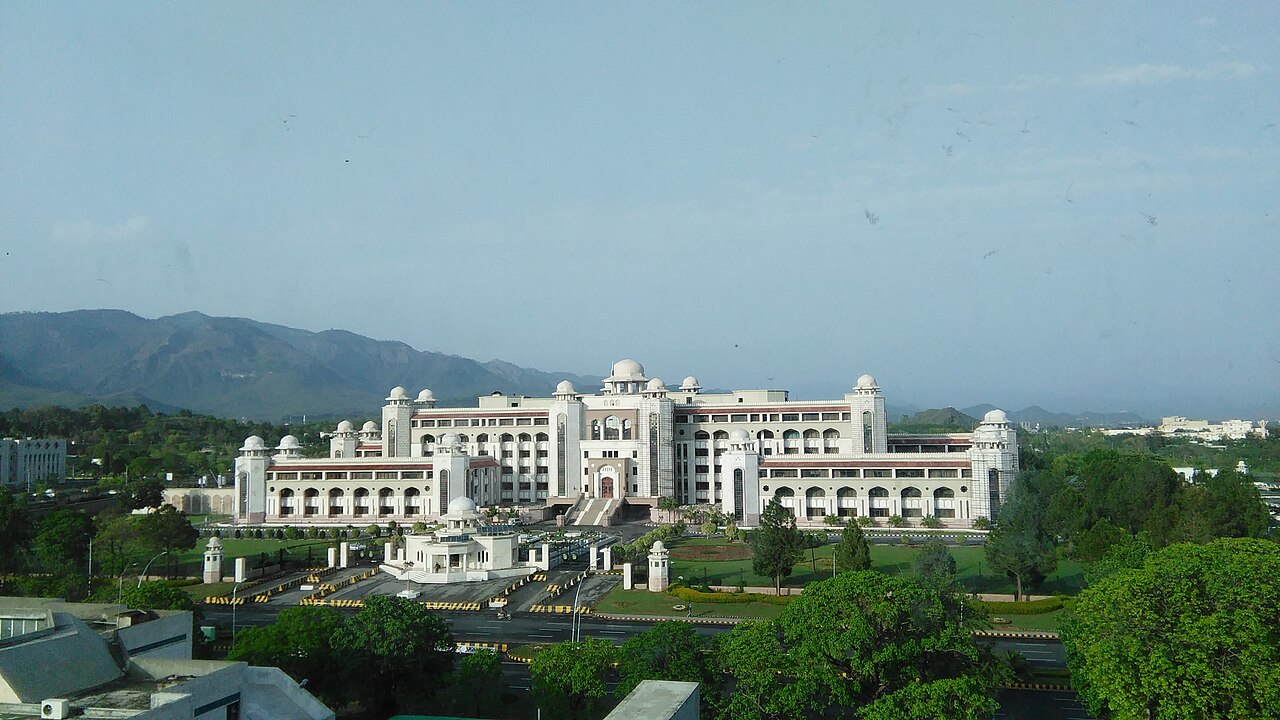
It is Marshal Asim Munir, Pakistan's Chief of Army Staff and the country's strongman, who has been leading the mediation between Washington and Tehran for three weeks. Islamabad, which shares a 909-kilometer border with Iran and has maintained a pragmatic relationship with the United States since Donald Trump's return to the White House, occupies a rare position: that of an actor listened to by both sides. Prime Minister Shehbaz Sharif personally received Abbas Araghchi on Friday, April 24, at the Prime Minister House official residence in the capital. The envisioned format—two rooms, two delegations, a Pakistani mediator shuttling between them—closely resembled that of the Vienna talks on nuclear issues in 2021-2022. It is precisely this scenario that is now suspended.
Tehran plays hardball
On the Iranian side, the government spokesman reiterated caution. "No direct meeting is planned," the government spokesman insisted Sunday morning, reaffirming that Iran "would not accept any negotiation under threat." Ali Larijani, former Speaker of Parliament and advisor to the Supreme Leader, called the American cancellation a "hostile signal." For Tehran, the stakes are threefold: to obtain a partial lifting of sanctions targeting oil, to have its right to civilian enrichment recognized, and to anchor the extension of the Israeli-Lebanese truce within a broader regional framework. None of these three objectives are progressing at this stage.
Markets worried
In Singapore, Brent crude opened Sunday evening up 2.4%, at $89.30 a barrel, on anticipation of a prolonged blockage of the Strait of Hormuz, through which approximately 25% of the world's maritime oil passes. Bloomberg published an analysis note on Sunday morning revising global growth forecasts for 2026 downward by 0.3 points, now at 2.7%. The Federal Reserve, due to meet on Wednesday, April 29, is now expected to adopt a wait-and-see posture: rising energy prices limit its room for maneuver on key interest rates. In Paris, the CAC 40, which had already lost 1.8% on Friday, April 24, is expected to reopen under pressure on Monday.
The scenario of a stalemate
European diplomats present in Islamabad are alluding to the risk of a "Lebanese-style stalemate": a ceasefire maintained on the ground but no substantive political negotiations. For Brussels, this hypothesis is the worst possible: it prolongs uncertainty, weakens energy supply chains, and prevents any reconstruction in Lebanon. The European Union's High Representative for Foreign Affairs announced an emergency meeting of the Foreign Affairs Council on Tuesday, April 28, in Brussels, with a potential European mediation to complement the Pakistani channel on the agenda. Beijing, which is closely following the issue, stated through its Ministry of Foreign Affairs that it was "available to contribute to any peaceful initiative."
Editorial opinion
The cancellation of Steve Witkoff and Jared Kushner's trip to Islamabad marks, at this stage, a tactical failure at least for the diplomatic sequence initiated by Donald Trump at the beginning of the month. It is difficult to know whether the real cause is security-related (the Washington Hilton incident) or political (fear of appearing weak after the presidential evacuation). In either case, the signal sent to Tehran is disastrous: American diplomacy appears hostage to its own domestic theater, unable to maintain a schedule it set itself. The slim hope remains for reactivation through the Pakistani channel. Asim Munir has what it takes for this: indisputable authority in Islamabad, continuous dialogue with Tehran, and a correct relationship with the Trump administration. But the window is closing: if nothing moves this week, the risk of a return of hostilities—open or latent—around Hormuz becomes the central scenario again. And with it, an economic shockwave for Europe and Asia.
Key takeaways
- Steve Witkoff and Jared Kushner cancel their trip to Islamabad (officially: security).
- Abbas Araghchi maintains his visit, welcomed by Ishaq Dar and Marshal Asim Munir.
- Iran: "no direct meeting planned" with the United States.
- Brent at $89.30 a barrel, +2.4% at Sunday evening's Asian opening.
- Bloomberg revises global growth for 2026 downward (2.7%, -0.3 pp).