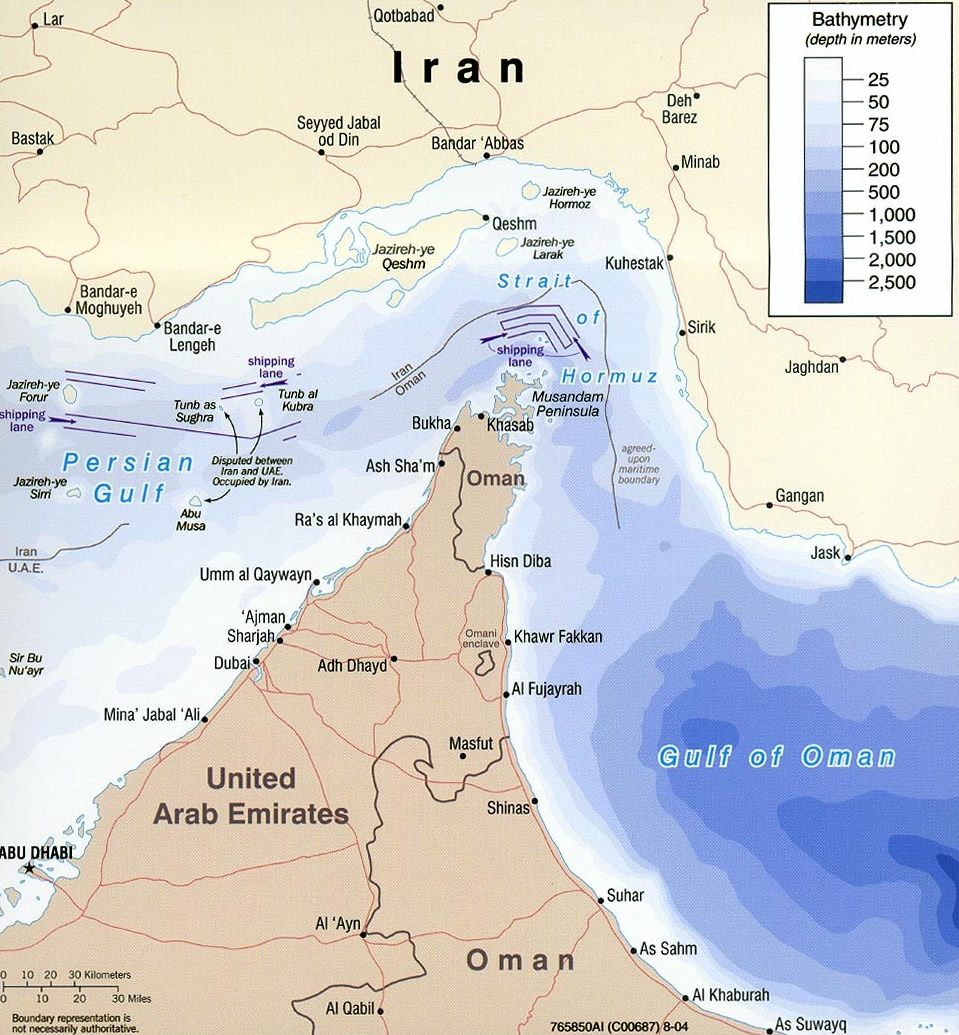
It was 6:12 AM local time on Friday, April 24, 2026, when three fast patrol boats of the Iranian Revolutionary Guards (IRGC) emerged from the starboard side of the container ship Euphoria, registered in Panama but operated by a Singapore-based company. Ordered to divert to Bandar Abbas, the vessel refused to comply. The Iranians then opened fire, primarily with heavy .50 caliber machine guns, perforating the bridge and damaging a refrigerated container without hitting the hull below the waterline. According to the statement released a few hours later by the Indian Ministry of External Affairs, the 21 Indian sailors on board - out of a total crew of 24 - are safe and unharmed and were attended to by a US destroyer from the 5th Fleet based in Bahrain.
Second ship targeted: the tanker Epaminondas
Less than forty minutes after the first incident, a second vessel was targeted: the LPG tanker Epaminondas, under Greek flag, carrying several Indian and Filipino nationals. The ship, which was transporting liquefied petroleum gas to Singapore, came under about ten warning shots before the Pasdaran withdrew as a US MH-60R Sea Hawk helicopter approached. A third vessel, whose identity has not been disclosed by the Pentagon, was also reportedly threatened without any shots being fired. No casualties were reported, but images broadcast mid-morning by Al-Arabiya channel, showing the Euphoria with its bridge riddled with impacts, sent a shockwave through the markets.
Iranian response: 'reopening Hormuz is impossible'
The official Iranian response came at 11:00 AM Tehran time, from Parliament Speaker Mohammad Bagher Ghalibaf. The regime's number two, who is leading nuclear negotiations, stated emphatically that 'the complete reopening of the Strait of Hormuz is simply impossible as long as the blatant violations of the truce by the United States continue.' Tehran explicitly targets two grievances: the US naval blockade that has paralyzed Iranian ports since April 14, and what Ghalibaf calls 'Israeli warmongering on all fronts.' The Islamic Republic does not admit to having 'attacked' the ships: it speaks of a 'control operation' in waters it claims as 'territorial' based on the nautical mile of sovereignty.
New Delhi between firmness and caution
In New Delhi, the Ministry of External Affairs summoned the Iranian chargé d'affaires in the morning, expressing the Indian government's 'deepest concern' regarding the safety of its 21 nationals. However, India maintains a measured diplomatic stance: 70% of its crude oil imports transit through Hormuz, and more than 200,000 Indian sailors work on the global fleets of tankers and cargo ships. Prime Minister Narendra Modi convened a restricted security council meeting in the afternoon and announced the dispatch of the frigate INS Sahyadri to reinforce the Indian Task Force 50 already deployed in the Gulf of Oman. No offensive military options are being considered, but New Delhi is accelerating its efforts for multinational maritime traffic protection.
Wall Street trembles, Brent at $99.40
The impact on the markets was immediate. At the London opening, Brent crude gained 4.2% to $99.40 a barrel, again approaching the psychological barrier of $100, which it had only crossed once since the start of the Iranian crisis. The CAC 40 opened down 0.67% at 8,171.93 points, weighed down by aviation (Air France-KLM -2.8%), cruise lines (Carnival, Royal Caribbean), and maritime insurance. Conversely, TotalEnergies, Shell, and BP rose. In Geneva, the spot freight rate for VLCC tankers on the Gulf-Asia route jumped 11% in one session, a sign of a durably established maritime risk premium.
Editorial opinion
The April 24th shootings are not a new threshold crossed: they are confirmation that the US-Iranian 'truce' that came into effect in early April does not cover the maritime war. Tehran has perfectly calibrated its action—no casualties, no sinking, just enough violence to remind everyone that it still controls the vital artery of global energy trade, but not enough to justify a massive US response. This is the art of controlled escalation. For the United States, the dilemma is agonizing: lifting the blockade would reward Iranian pressure; maintaining it guarantees that further incidents will occur. For India, France, and Europe, all dependent on the strait, the only rational response would be a permanent joint naval force—but no capital dares to politically assume it. As long as this strategic vacuum persists, Hormuz will remain the nervous barometer of a Middle East suspended between war and peace.
Key takeaways
- Three merchant ships targeted on Friday, April 24, 2026, in the Strait of Hormuz.
- Container ship Euphoria (Panama) and tanker Epaminondas (Greece) damaged by Pasdaran fire.
- 21 Indian sailors on board, all unharmed; US 5th Fleet intervention.
- Tehran (Ghalibaf) refuses to fully reopen Hormuz as long as the US naval blockade lasts.
- Brent at $99.40/barrel, CAC 40 at 8,171.93 pts (-0.67%) at opening.