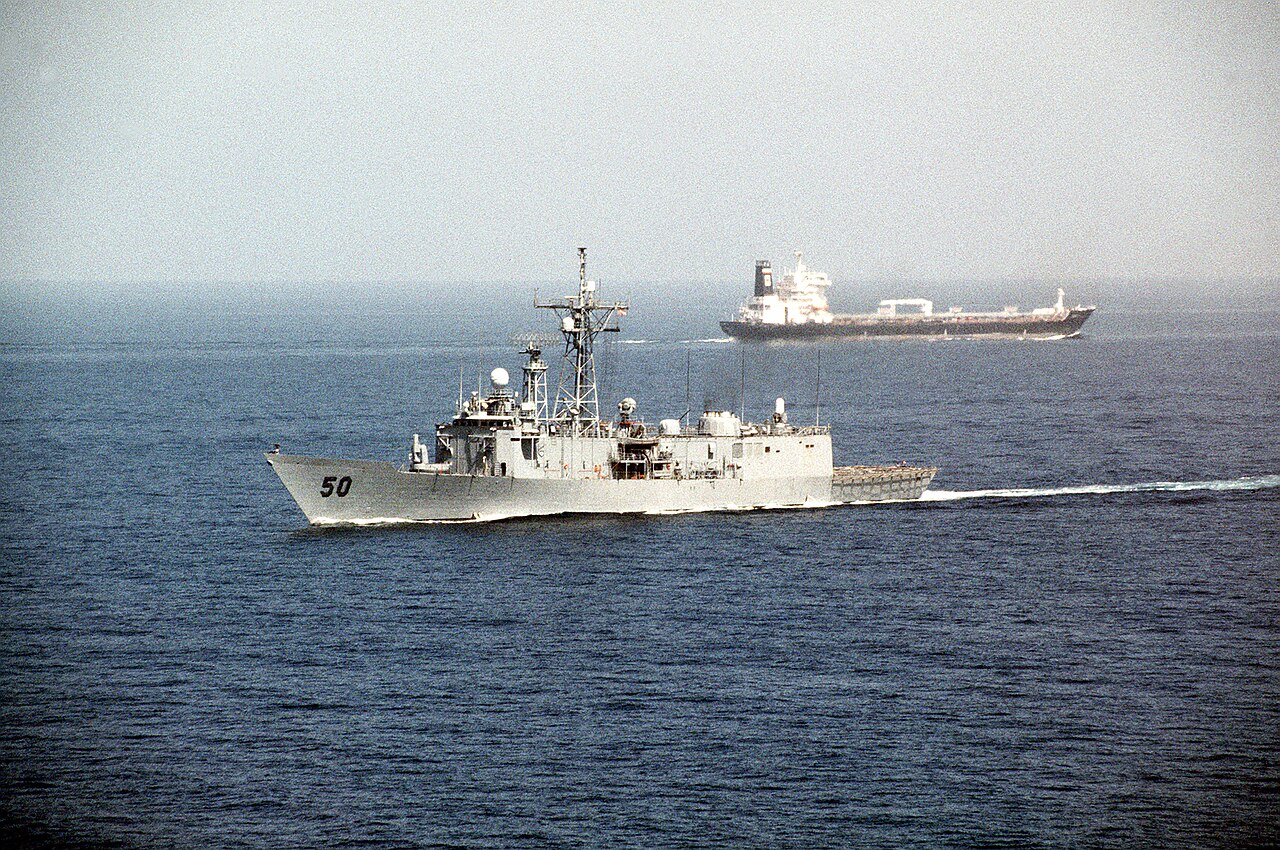
Twenty-four hours after the "sine die" extension of the truce announced by Donald Trump, Iran has shown it remains in control of the timeline. On Wednesday morning, April 22, 2026, Tehran confirmed it had seized two merchant ships "neither American nor Israeli" in the Strait of Hormuz, a passage for nearly a fifth of the world's hydrocarbons. Tasnim, a news agency close to the Revolutionary Guards, specified that the vessels – a cargo ship flying the Panamanian flag and a tanker under the Marshall Islands flag – were diverted to the port of Bandar Abbas for "routine port inspection." No crew members were reportedly injured.
Washington Downplays, Knowingly
In Washington, the reaction was surprisingly measured. During the 1 p.m. local time press briefing, State Department spokesperson Tammy Bruce stated that these seizures "do not constitute a violation" of the truce. "The Strait of Hormuz remains an active area of tension, and we did not expect these incidents to disappear overnight," she said, while confirming that the naval blockade imposed by the United States on Iranian ports – Bandar Abbas, Khargh, Bushehr, Jask – remained fully in effect. Donald Trump, when questioned by the press after a lunch with Japanese Prime Minister Sanae Takaichi at the White House, responded: "Iran did something small. We have something very big. Patience."
Structural Fragility
Behind the presidential stance, analysts at the Center for Strategic and International Studies (CSIS) in Washington emphasize structural fragility. "This truce rests on an untenable imbalance: Iran is under a total economic blockade but retains the ability to act militarily in the Gulf," analyzes Jon Alterman, director of the CSIS Middle East Program, in a note published Wednesday evening. Iranian oil revenue has collapsed to less than 110,000 barrels per day exported in April, down from 1.4 million in March, a 92% drop. The Iranian rial traded on Thursday at 1.21 million to the dollar on Tehran's parallel market, a new all-time record.
Three Ships Targeted in Hormuz
The two seizures on Wednesday add to a third incident: according to Reuters, an Iranian drone fired on a Philippine cargo ship near the same strait on the same day, without casualties. In total, since the truce came into effect on April 8, nine maritime incidents – seizures, boardings, warning shots – have been recorded near Hormuz. The US Central Command (CENTCOM), led by General Erik Kurilla, has reinforced its presence in the area: three Aegis destroyers, a nuclear attack submarine, and several squadrons of F/A-18 fighter-bombers are now deployed in the Sea of Oman.
Trump Buys Time
Donald Trump did not provide a "fixed date" on Wednesday evening for receiving an Iranian proposal, contrary to previous announcements. According to Le Figaro, the American president is reportedly considering waiting "several weeks" for economic pressure to make Tehran yield before any return to active diplomacy. The trilateral summit USA-Iran-UK planned for Muscat at the end of April has been postponed indefinitely. However, Marco Rubio is scheduled to receive the Omani Minister of Foreign Affairs Badr al-Busaidi in Washington on Friday; he has served as an unofficial mediator between the two capitals since 2024.
Cautious European Reactions
The European Union, through High Representative Kaja Kallas, called on "all parties for restraint" on Thursday and urged Tehran to "immediately release the seized ships and their crews." France, which has lost influence in the matter since the 2022 rupture, issued only a laconic statement from the Quai d'Orsay recalling its "commitment to freedom of navigation." Beijing, 47% of whose oil imports transited through Hormuz in 2024, is observing an unusual silence for the moment.
Editorial Opinion
The unfolding scenario points to a "low-intensity cold war" in the Gulf, where belligerents avoid direct confrontation but multiply calibrated incidents. This strategy has a cost: for Iran, it is programmed economic asphyxiation; for the United States, it is the weariness of a massive military deployment with no prospect of a political resolution; for global trade, it is a permanent risk premium on energy. The current truce is not peace: it is the temporary absence of bombs while waiting for one of the two sides to crack. Trump is betting on Tehran; the ayatollahs are betting on the November midterms. Between them, it is the Filipino, Panamanian, and Indian sailors – those who actually keep the seized ships running – who pay the human price. Omani diplomacy is now the last rampart against this stalemate.
Key Takeaways
- Iran seizes two merchant ships "neither American nor Israeli" in the Strait of Hormuz on April 22.
- Washington, through Tammy Bruce, does not consider these seizures a violation of the truce.
- The US naval blockade remains fully in effect on Iranian ports.
- Iranian oil exports have fallen by 92% since April 8, the rial at 1.21 million to the dollar.
- The trilateral summit in Muscat has been postponed indefinitely; the Quai d'Orsay remains on the sidelines.