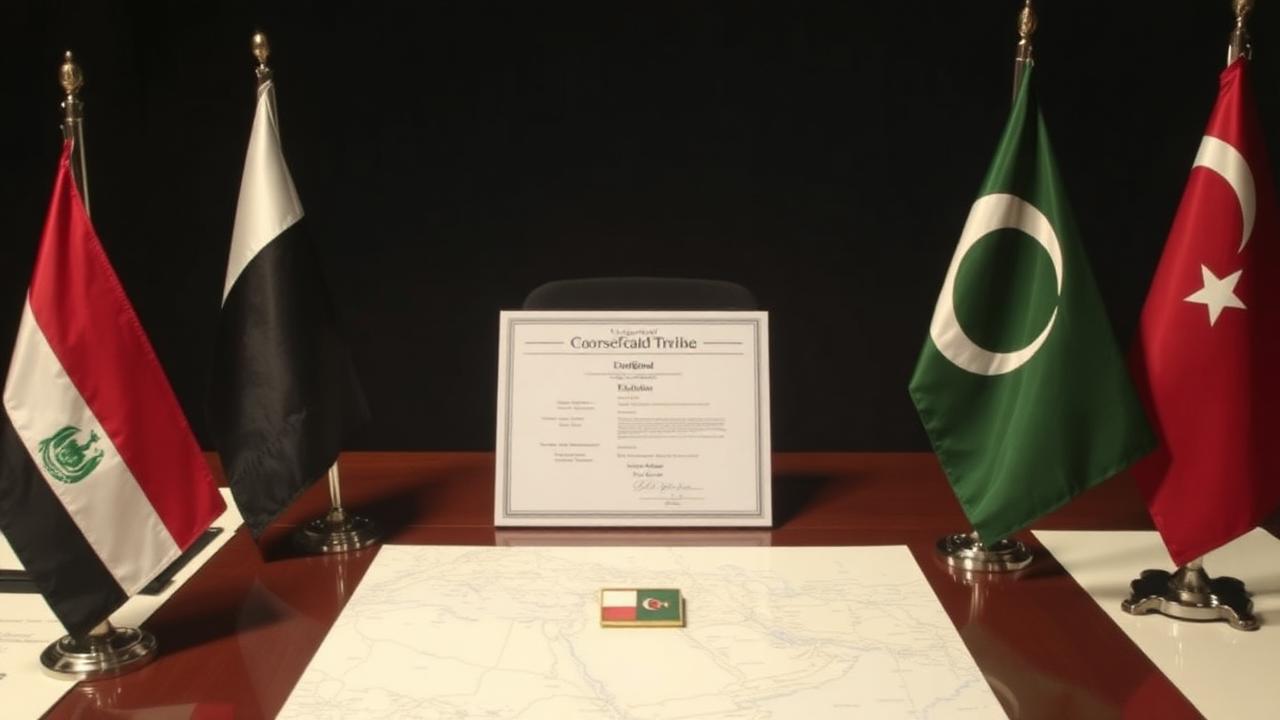
International diplomacy reached a decisive turning point on the evening of Sunday, April 5, 2026. According to two Middle Eastern officials speaking anonymously to the Associated Press, Egypt, Pakistan, and Turkey simultaneously submitted a draft 45-day ceasefire to Washington and Tehran, accompanied by a roadmap towards a permanent agreement. This two-stage plan first calls for an immediate halt to airstrikes and missile fire, followed by the gradual reopening of the Strait of Hormuz – closed since February 28 by the Iranian Navy in retaliation for US-Israeli bombings.
The most ambitious part of the document aims for a comprehensive political agreement within fifteen to twenty days of the ceasefire taking effect. The mediators propose a negotiation framework including the issue of Iran's nuclear program, the withdrawal of US naval forces from the Persian Gulf, and the partial lifting of economic sanctions reinstated by the Trump administration in January 2026. According to CNBC and Reuters, the proposal also includes security guarantees for the energy infrastructure of Gulf countries, notably the United Arab Emirates and Bahrain, recurrent targets of Iranian strikes since the beginning of the conflict.
Tehran's initial reaction remains cautious. The Iranian Ministry of Foreign Affairs stated it is studying the document "seriously" while reiterating its precondition of a total halt to bombings on civilian infrastructure. Iran, however, rejects the idea of reopening the Strait of Hormuz as part of a temporary ceasefire, considering the closure of the passage its main negotiation leverage. On the American side, the White House has not yet officially responded, but President Trump has set a Tuesday evening ultimatum for an agreement to be reached or the strait to be reopened, threatening "hell" otherwise.
The economic stakes of this mediation are considerable. Since the closure of the Strait of Hormuz, through which about 21% of global oil passes, the price of a barrel of Brent has soared beyond $115, fueling generalized inflation in importing countries. Global financial markets have lost over $8 trillion in capitalisation in five weeks of conflict. Analysts at Port Shelter Investment Management estimate that, unlike previous crises, markets will not return to pre-war levels even with a quick agreement, due to a structural slowdown in global growth and a sustained decline in consumer spending.
The success of this tripartite mediation will largely depend on the parties' ability to overcome a fundamental obstacle: Tehran demands an end to strikes before any concession, while Washington conditions the halt of bombings on the reopening of Hormuz. This diplomatic vicious cycle recalls the deadlocks observed during negotiations on Iran's nuclear program in 2015. The forty-five days proposed by the mediators aim precisely to create a space for mutual trust – but Trump's ultimatum, set for Tuesday evening, could torpedo this window before it even opens.