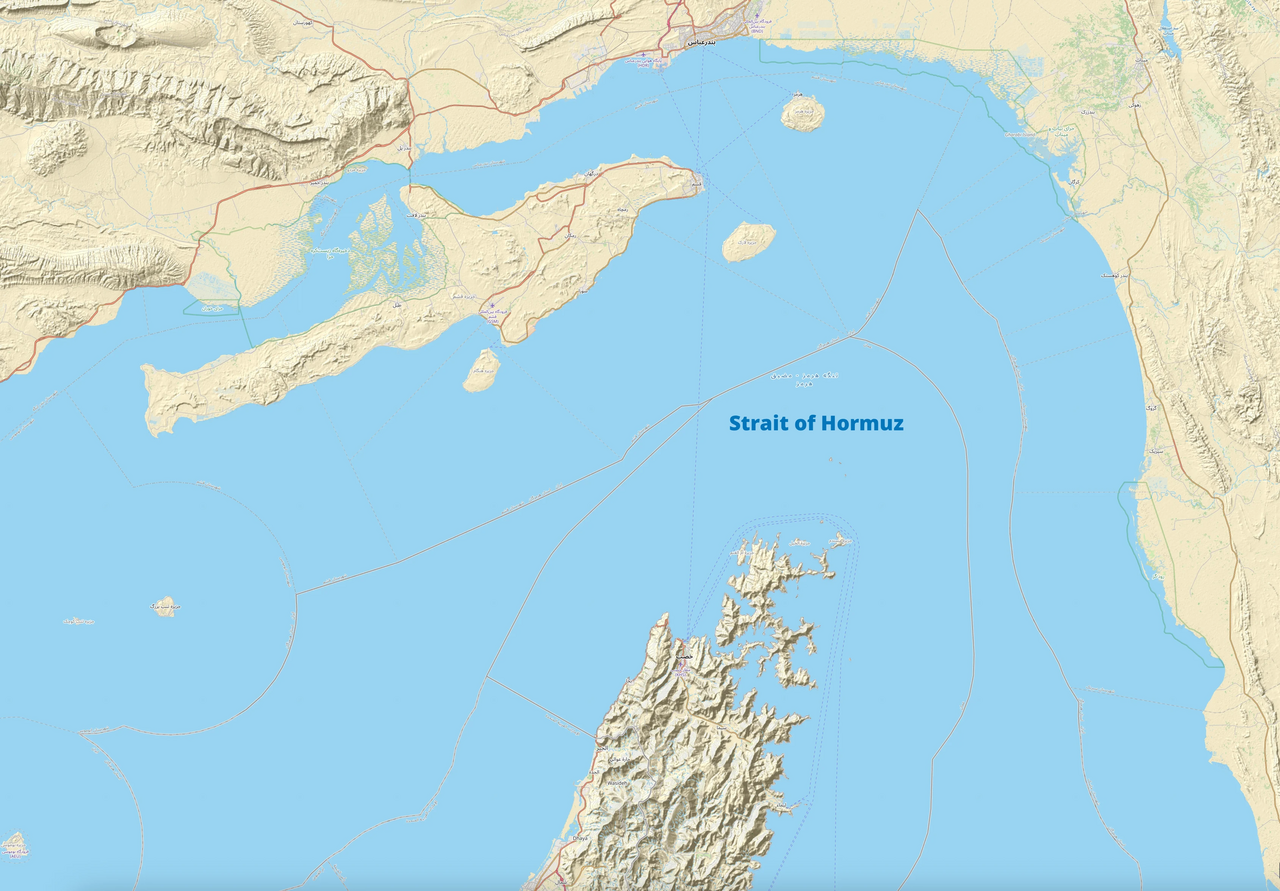
All diplomatic eyes were turned towards Islamabad on Saturday, April 25, 2026. Iranian Foreign Minister Abbas Araghchi arrived in the mid-morning, welcomed on the tarmac by his Pakistani counterpart Ishaq Dar before a meeting with Marshal Asim Munir, head of the Pakistani army and the country's de facto strongman. A few hours later, US envoys Steve Witkoff and Jared Kushner—already involved in the Israel-Lebanon mediation at the White House on April 23—were expected in the Pakistani capital. A third round of indirect talks between Washington and Tehran seemed possible, two days after Donald Trump's unilateral extension of the Israeli-Lebanese ceasefire and as the Strait of Hormuz remained under extreme tension.
A Choreographed Dialogue of the Deaf
However, contacts were expected to be complicated. Tehran made it known through government spokeswoman Fatemeh Mohajerani that "no direct meeting is planned with the United States" and that "any discussion must go through an intermediary." The Islamic Republic, faithful to its doctrine since 2003, refuses any bilateral dialogue in the absence of a prior lifting of American sanctions. This is precisely the role Islamabad is expected to play: a transmission channel, following the model of the Omani mediation conducted until 2024. This Iranian stance, presented as a matter of principle, is also the result of internal calculations: Supreme Leader Ali Khamenei does not want to appear to be yielding to Washington at a time when American military pressure on the Gulf is at its peak.
Why Pakistan, Not Oman or Qatar?
The choice of Islamabad is surprising. Traditionally, US-Iran mediations have gone through Muscat or Doha. But Oman has remained on the sidelines since the failure of nuclear talks in June 2025, and Qatar, perceived as too close to Hamas, no longer had the trust of the new US administration. Pakistan, on the other hand, offers a triple advantage: it is a nuclear power respected by Iran, a historic ally of the United States in the region, and its army chief Asim Munir has maintained personal relations with Witkoff since his visit to the White House in June 2025. Islamabad also sees this as an opportunity to restore its diplomatic image, tarnished by Indo-Pakistani rivalry and the economic crisis.
The Context: Maximum Pressure and a Fragile Truce
Since Operation "Rising Lion" launched by Israel and the United States against Iranian nuclear sites in the summer of 2025, the Iranian economy has been on its knees: oil exports down 90%, the rial at a historic low, inflation at 56%. The US naval blockade in the Persian Gulf is strangling maritime trade, and the Pasdaran's firing on the ships Euphoria and Epaminondas on April 24 served as a reminder that the "truce" does not include the Strait of Hormuz. Donald Trump has set the tempo: he declared himself ready to wait for "the best deal" but hinted that the window would close "in the coming weeks." For Tehran, the calculation is agonizing: yielding now means appearing weak; refusing risks a new wave of strikes against drone factories and centrifuges still active in Fordow.
Incompatible Demands
The stated positions remain diametrically opposed. Washington demands: complete dismantling of Iranian centrifuges above 5% enrichment, export of already produced enriched uranium, end of arms transfers to Hezbollah and the Houthis, freezing of the ballistic missile program above 2,000 km range. Tehran, in mirror, demands: immediate lifting of all US sanctions, written guarantee of non-aggression, end of the naval blockade, withdrawal of US bases from the Arabian Peninsula. In between, Pakistani and Qatari mediators are working on a more modest "framework agreement": a mutual suspension for six months, enhanced IAEA inspections, partial unblocking of Iranian assets in South Korea. No official timetable has yet been announced, and the US delegation specified that it "would not stay more than 48 hours in Islamabad."
Editorial Opinion
The Islamabad sequence bears no resemblance to a historic summit: it is a diplomatic choreography as cautious as it is symbolic. But it marks a major political fact: despite the strikes of summer 2025, despite the economic asphyxiation, despite the deaths of several Iranian nuclear scientists, the Tehran-Washington channel has never been completely closed. This is the perverse genius of Iranian diplomacy: transforming every military humiliation into a negotiation lever. Tehran's refusal of a face-to-face with Witkoff and Kushner is not a failure—it is the very condition that makes a continuation possible. Behind the scenes, the Pakistanis are transmitting, the Qataris are filtering, the Emiratis are listening. Donald Trump, who made the "deal of the century" with Iran one of his personal objectives, has no desire to break off. And Khamenei, old and tired, knows that a deal might seal his legacy. The Israeli unknown remains: Benjamin Netanyahu, who was not consulted on the truce extension, could at any moment send a signal—a targeted strike, an assassination—capable of derailing the process. The Middle East of the coming weeks is being decided in Islamabad, but is also being written in Tel Aviv.
Key Takeaways
- April 25, 2026: Abbas Araghchi in Islamabad, Steve Witkoff and Jared Kushner expected.
- Tehran refuses all direct talks; Pakistan plays the role of mediator.
- Choice of Islamabad: Asim Munir (army chief) close to Witkoff since June 2025.
- Context: Iranian oil exports down 90%, US naval blockade.
- No official timetable; US delegation expected for a maximum of 48 hours.