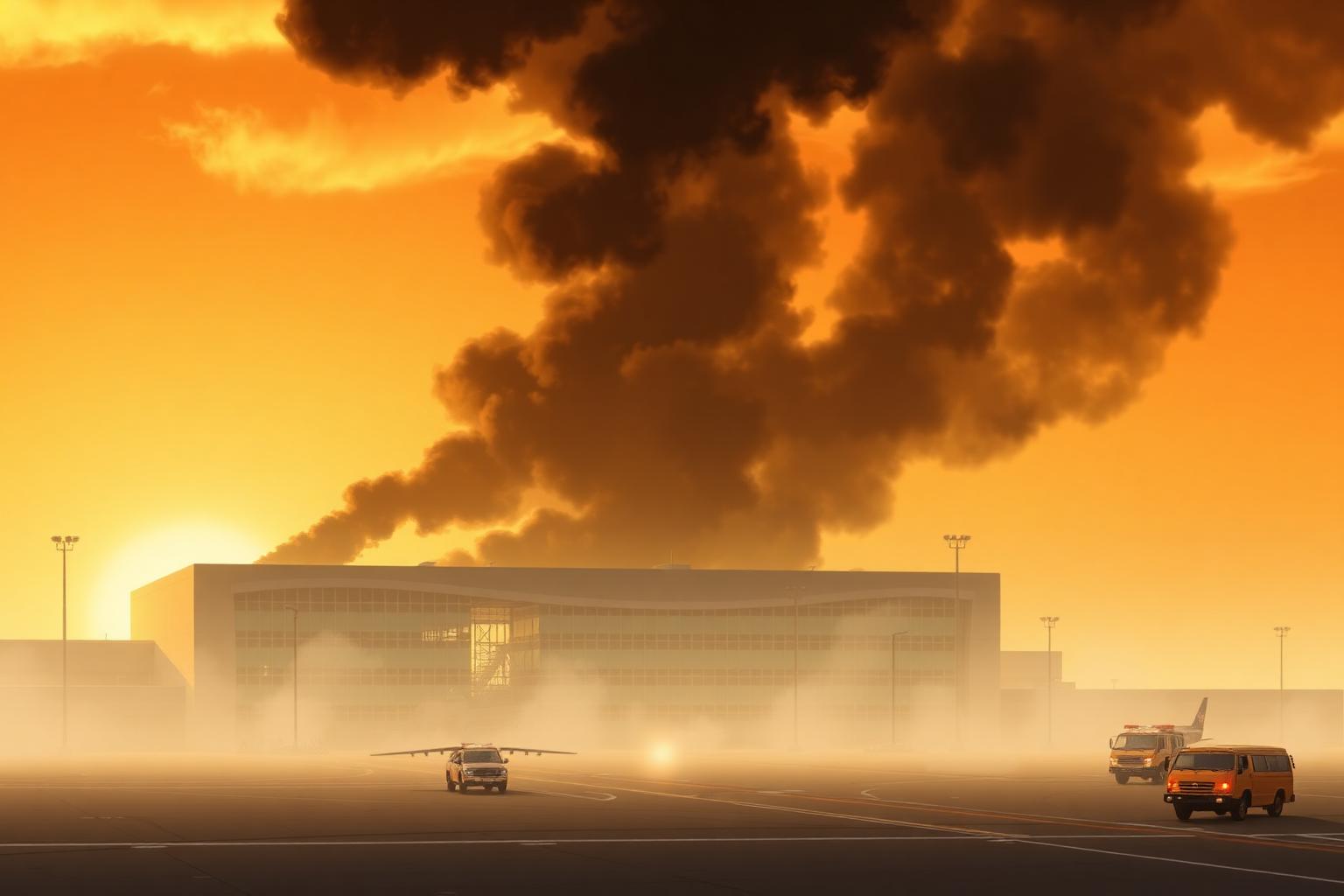
The Middle East has been holding its breath since February 28, 2026, the date on which the United States and Israel carried out massive coordinated strikes on Iranian territory, triggering a series of retaliations that have not ceased since. This Wednesday morning, the Kuwaiti capital was directly hit: the international airport, the target of ballistic missiles and drones from Iran, suffered significant damage. One civilian died, several others were injured. Kuwaiti diplomacy has called the attack an act of "state terrorism" targeting civilian infrastructure and diplomatic missions.
The Gulf on the Front Line
Kuwait is not alone. Bahrain's anti-missile defenses intercepted three missiles and several drones on the same morning, according to the General Command of the Bahraini Defense Forces. Since the beginning of the conflict, the Gulf monarchies have been paying the price for a war they did not declare, hostages to a confrontation between Tehran and Washington from which they had hoped to remain on the sidelines.
Washington Between Deterrence and Negotiation
On the American side, the posture remains ambivalent. The US Central Command (CENTCOM) announced that it had carried out "defensive" strikes over the weekend against Iranian radar sites and drone control systems in Goruk and on Qeshm Island – in response, it said, to the downing of an American MQ-1 drone. Marco Rubio, Secretary of State, personally appeared before two successive Senate committees to defend the administration's stance, saying he was "optimistic" about the possibility of future nuclear negotiations with Tehran, although Iranian mediators have, according to some sources, suspended contacts.
Donald Trump's Arbitration
Donald Trump has not yet decided. Pressured by journalists, he used a cryptic phrase: "Make peace or do otherwise. And the other way is not pleasant." This Thursday, he is expected to announce his decision. Between pressure from Congress for a formal declaration of war and hawks demanding a decisive strike on Iran's nuclear program, the White House is navigating diplomatic waters unknown since the Gulf War of 1991.
Iran's Threshold Strategy
Iran, for its part, oscillates between negotiation signals and demonstrations of force. Tehran announced that it had targeted an airbase used in American strikes, while keeping channels of mediation open through third states. The logic remains that of an arm wrestling match: showing enough resistance to have weight in negotiations, without crossing the threshold that would provoke an overwhelming response. A strategy that was in place during previous crises, but whose effectiveness is now measured in human lives in Kuwait, the Emirates, and Bahrain.
The Shockwave on the Global Economy
For global markets, the scenario has been the most feared for months: a long, low-intensity but permanent conflict, keeping the Strait of Hormuz in a state of structural uncertainty. Since the beginning of the conflict, several shipping companies have rerouted their tankers, the price of a barrel has remained at historically high levels, and several insurers have suspended their coverage for transits in the Gulf. The global economy, already weakened by years of post-pandemic logistical disruptions, is absorbing this new shock with a facade of resilience that economists struggle to describe as anything other than resignation.
Editorial Opinion
It has become impossible to pretend that this war is not happening. Three months after the February 28 strikes, the civilian death toll in the Gulf, the chain of retaliations, and the progressive paralysis of the Strait of Hormuz paint a picture of an entrenched conflict. The question is no longer whether we are at war, but how long the actors will accept to keep its name silent. Trump will have to decide: seal an imperfect but real nuclear deal, or ratify by arms an escalation whose next steps neither Tehran nor Washington any longer control.
To Remember
- Iranian strikes on Kuwait City Airport: 1 dead, several injured.
- Bahrain intercepts 3 Iranian missiles and several drones on the same morning.
- CENTCOM claims "defensive" strikes on Iranian sites in Goruk and Qeshm.
- Rubio says "optimistic" about future nuclear negotiations despite tensions.
- Trump to announce his decision Thursday between agreement and resumption of strikes.