
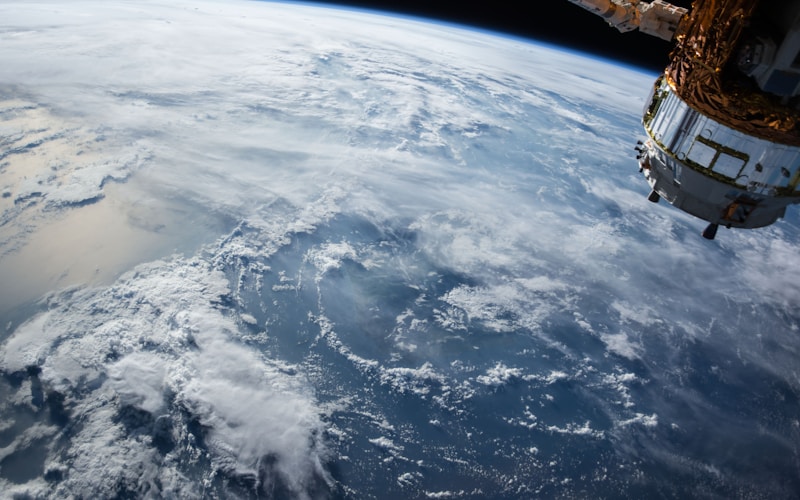
SpaceX announced that its Starlink constellation has crossed the 10 million subscriber mark worldwide, adding 1 million new users in just 53 days – the fastest growth rate in the history of satellite internet. The company aims for 25 million subscribers by the end of 2026.
Starlink's Gen2 satellites promise "100 times greater" data density than previous models, thanks to S-band spectrum and new phased array antennas. This technological advancement aims to provide connectivity comparable to terrestrial networks in rural and remote areas.
The service is operational in over 100 countries and territories. In rural areas of the United States, Africa, and South America, Starlink often represents the first viable alternative to a lack of connection. Speeds reach 100 to 300 Mbps with latency of 20 to 40 ms under optimal conditions.
Competition is intensifying: Eutelsat OneWeb (merger completed in 2023) and Amazon's Project Kuiper (first satellites launched in 2024) are developing their competing constellations. Amazon plans 3,236 satellites for Kuiper, while SpaceX has authorization to deploy up to 42,000 Starlink satellites.
Environmental and astronomical concerns persist. The tens of thousands of satellites in low Earth orbit affect astronomical observations. SpaceX has developed anti-reflective coatings, but the European Southern Observatory (ESO) and the International Astronomical Union continue to call for additional measures.
Despite this impressive growth, the 2.6 billion unconnected people globally (according to the ITU) remain a colossal challenge. The cost of a Starlink subscription ($50 to $120/month depending on the region) remains prohibitive for a large portion of the world's population, especially in Sub-Saharan Africa and South Asia.