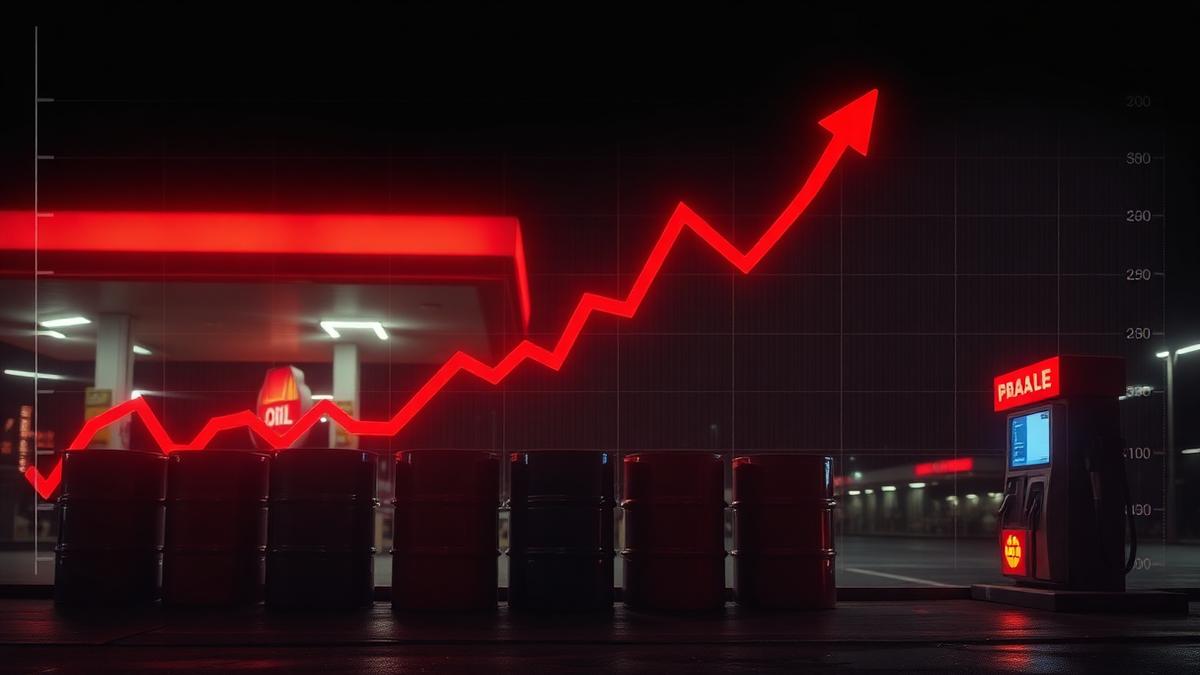
The specter of inflation has returned to the United States. The Bureau of Labor Statistics (BLS) released Consumer Price Index (CPI) data for March 2026 on Friday, April 10, revealing a marked acceleration: annual inflation reached 3.3%, up from 2.8% in February – a jump of nearly a percentage point and the highest level since May 2024. This rise ends the gradual disinflationary trend observed since the peak of 9.1% in June 2022, and places the Federal Reserve in a delicate position.
The primary driver of this inflationary surge is oil. The war between the United States, Israel, and Iran, triggered in March, led to the closure of the Strait of Hormuz and a spike in crude oil prices. The average price of a gallon of gasoline in the US jumped 30% in March, reaching unprecedented levels since 2022. Energy alone contributed more than half of the monthly inflation acceleration. Food prices also increased, with transportation costs rippling through the entire supply chain.
Financial markets reacted nervously to the release. Yields on 10-year US Treasury bonds surged by 12 basis points, while stock indices declined – the S&P 500 lost 1.2% in early trading. Traders immediately reassessed the probabilities of a Fed rate cut: before the April 8 ceasefire, markets anticipated a first cut in September; after the CPI data, this prospect receded. A key Fed official even mentioned the possibility of a rate hike if inflation persisted.
The ceasefire announced on April 8 between Washington and Tehran briefly reassured markets: the probability of a rate cut by the end of 2026 rose to 43% according to CME FedWatch, from 14% before the announcement. But the fragility of the truce – Iran briefly closed Hormuz again on April 9 – maintains considerable uncertainty. If oil prices remain high, Goldman Sachs economists anticipate the CPI could reach 4% by the summer.
For American households, the impact is immediate and tangible. The cost of a tank of gasoline has increased by $15 to $20 compared to February. Rents continue their steady rise, adding structural pressure to the cyclical inflation linked to oil. The job market remains solid – 178,000 jobs created in March, unemployment at 4.3% – but real wages are stagnating in the face of rising prices. The central question for the coming months: will the ceasefire hold long enough for oil prices to normalize?