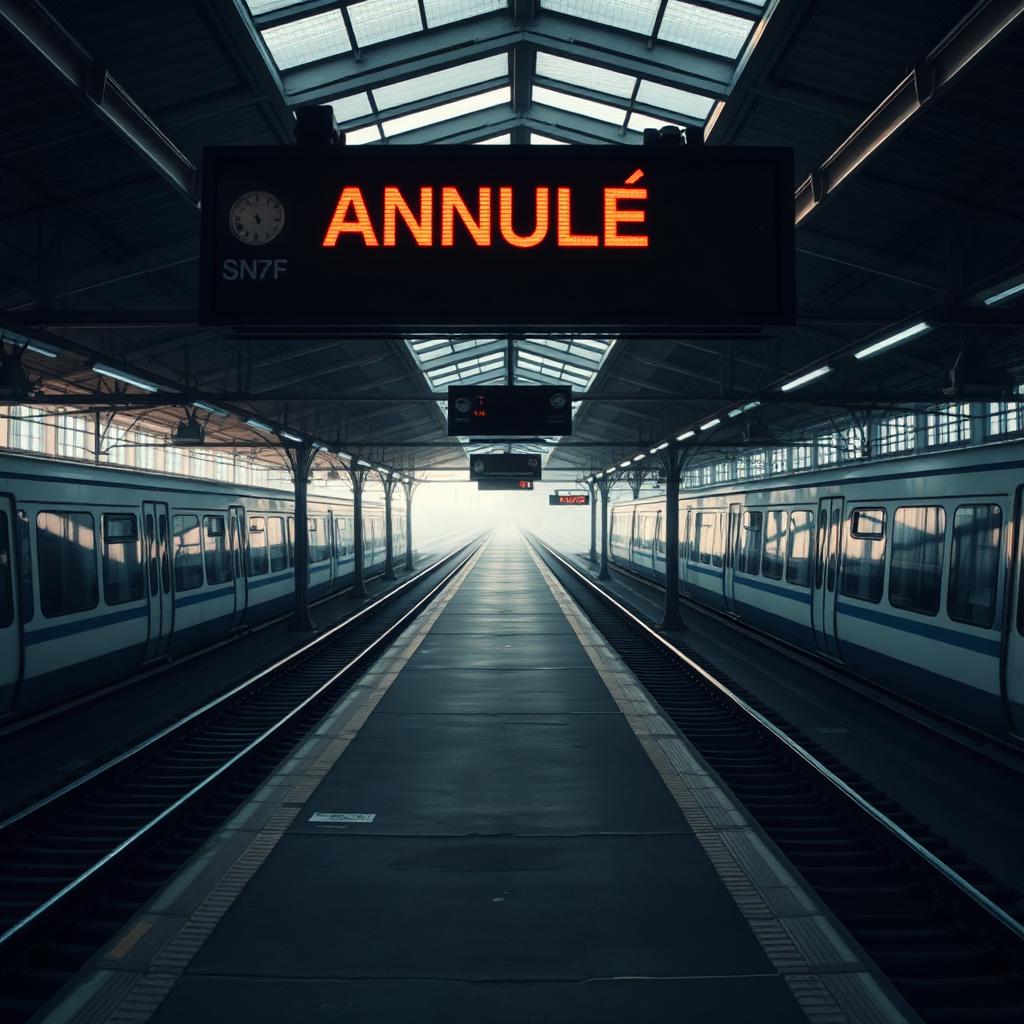
This Wednesday morning, thousands of French travelers discovered the silence of empty platforms or the litany of cancellation notices at the station. Following a call from the four main unions in the group — CGT Cheminots, Unsa Ferroviaire, Sud-Rail, and CFDT Cheminots — a one-day national strike is severely disrupting TGV, Intercités, RER, and Transilien services. A scene not seen for quite some time: that of a united inter-union front, refusing to yield.
This is the first unified national strike under the leadership of Jean Castex, appointed CEO of SNCF on November 3rd, 2025. For the man who arrived at the head of the group promising to restore dialogue and mend a fractured company, June 10th represents far more than a routine social movement. It's an existential test. And so far, the grade isn't good.
What the Unions Really Want
The demands put forth by the four federations are numerous but revolve around a core issue: wages and working conditions. Despite a 2.57% increase announced for 2026 as part of mandatory annual negotiations, unions deem this raise insufficient given persistent inflation. They point out that fuel prices have risen by over 25% by the end of March 2026, inflation is well above 2.5% for the same period, and the minimum wage will increase by 2.4% on June 1st—yet the railway employers continue to act as if all is well.
On the working conditions front, the situation is even more alarming. At SNCF, one in three employees currently reports suffering from anxiety or depressive disorders. Sick leaves related to mental health have increased by 40% in five years. Unions denounce what they call "compulsive" reorganizations, the group's filialization, forced relocations, and a rise in psychosocial risks, citing work accidents, sick leaves, and stress-related suicides. These are no longer abstract numbers: they represent lives damaged by managerial decisions made in Parisian open-plan offices.
Since the end of hiring under the 'statut' employment contract in 2020, railway workers integrated into new subsidiaries no longer benefit from the same rights as those in the historical public group. This internal fracture has been eroding the group's cohesion for years, and neither management nor the government seems in a hurry to address it seriously.
On the Rails: Organized Chaos
In practical terms, for travelers, the day resembles an obstacle course. Nationally, two out of three TGV trains are expected to run. On the Intercités network, only one in two trains will operate, day and night. SNCF states that passengers whose trains are canceled will be contacted and can obtain a refund or reschedule their ticket.
In the Île-de-France region, the picture is even worse. The circulation of most RER and Transilien trains is disrupted throughout the day, although metro line traffic should remain normal or nearly normal. The RER D will run between one in two and one in five trains depending on the branch, with some branches only operating during peak hours. Line R shows between one in two and one in three trains. For thousands of workers in the Paris region, it's a day to organize frantically.
What's Next?
This day of action comes in a context of broken social dialogue following a joint union meeting on April 14th, 2026. For now, the notice only covers a single day. However, several sources mention the risk of recurring strikes if negotiations fail, particularly in early July, which could disrupt the launch of the TGV-M trains scheduled for July 1st. Jean Castex has a short window to respond. If he misses it, the summer promises to be long.
Editorial Opinion — Théodore Mécanis
A unified strike involving four unions that usually clash on everything isn't built on a whim. It's built on years of contempt, imposed reorganizations, and documented workplace suffering. The figure is stark: one in three employees in psychological distress. When a company reaches this point, it's no longer just a social issue—it's a human crisis. Jean Castex, who knows the workings of the state better than anyone, knows exactly what needs to be done. The real question is whether he has the authority to do it against a management that confuses modernization with impoverishment. June 10th, 2026, should serve as a warning. If it's not heeded, July will turn the warning into an inferno.
Key Takeaways
- 4 unions united (CGT, Unsa, Sud-Rail, CFDT): first unified strike under Castex.
- 2 out of 3 TGV trains, 1 out of 2 Intercités trains; RER D and Line R trains heavily disrupted.
- Salary increase of 2.57% deemed insufficient in the face of inflation.
- 1 in 3 railway workers in psychological distress, +40% of sick leaves related to mental health in 5 years.
- Risk of recurring strikes in early July, on the eve of the TGV-M launch.