
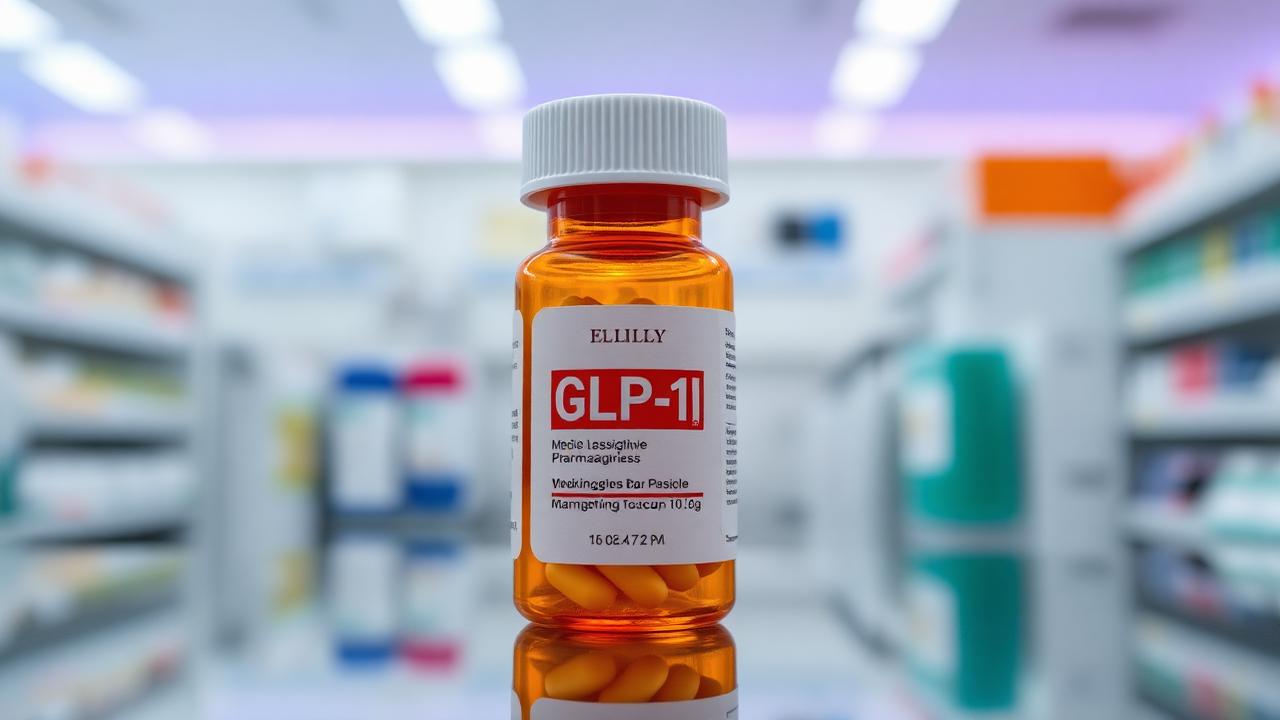
This marks a historic step in the fight against obesity. The U.S. Food and Drug Administration (FDA) has approved orforglipron, marketed as Foundayo by Eli Lilly, for the treatment of obesity in adults. It is the first GLP-1 receptor agonist available in oral tablet form—a significant breakthrough in a market previously dominated by injections (Novo Nordisk's Ozempic, Wegovy; Eli Lilly's Mounjaro/Zepbound). The small-molecule drug offers a considerable potential advantage in ease of use and production cost compared to complex injectable peptides. (
Phase III clinical trials demonstrated an average weight loss of 14.7% of body weight at 36 weeks in patients treated with orforglipron at the maximum dose, compared to 2.3% in the placebo group. Side effects are comparable to injectable GLP-1s: nausea, diarrhea, and vomiting, primarily at the beginning of treatment. The cardiovascular safety profile is also favorable, with a significant reduction in inflammation markers and triglycerides. While the results do not yet rival the 22% weight loss observed with the injectable tirzepatide (Zepbound), the convenience of a daily oral intake could appeal to the millions of patients reluctant to use injections. (
The impact on the pharmaceutical market is colossal. The global market for GLP-1 treatments for obesity and diabetes is estimated at $50 billion in 2025 and is projected to exceed $130 billion by 2030, according to Goldman Sachs. Eli Lilly's stock (LLY) surged 8% on the announcement, reaching a record market capitalization of $1.05 trillion. Conversely, Novo Nordisk, which dominates the market with Ozempic and Wegovy, saw its stock fall by 4%—investors anticipating increased competitive pressure. The race is now on between pills and injections, and consumers are likely to be the main beneficiaries. (
In France, the issue of access to these treatments is crucial. GLP-1s for obesity are not currently reimbursed by social security (they are only covered for type 2 diabetes). The monthly cost of treatment with Wegovy or Mounjaro ranges between 300 and 500 euros in pharmacies, making it a treatment reserved for the wealthiest patients. The arrival of an oral form, potentially less costly to produce, could change the situation if the price is set competitively. The High Authority for Health (HAS) will need to evaluate the benefit/risk ratio and the budgetary impact before any reimbursement decision—a process that typically takes 12 to 18 months after FDA approval. (
Beyond pharmacology, the approval of orforglipron reignites a fundamental societal debate: should obesity be medicalized? Proponents of a medical approach emphasize that obesity is a complex chronic disease, influenced by genetics, hormones, and environment, and that the 'eat less, move more' advice has failed to curb the epidemic (42% of Americans are obese, 17% of French adults). Critics worry about a 'magic pill' that overlooks systemic causes—industrial junk food, sedentary lifestyles, social inequalities—and creates lifelong dependence on medication (weight regain upon discontinuation is almost systematic). The truth, as often, likely lies somewhere in between: the pill does not replace prevention, but it offers a lifeline to millions for whom diets are insufficient. (