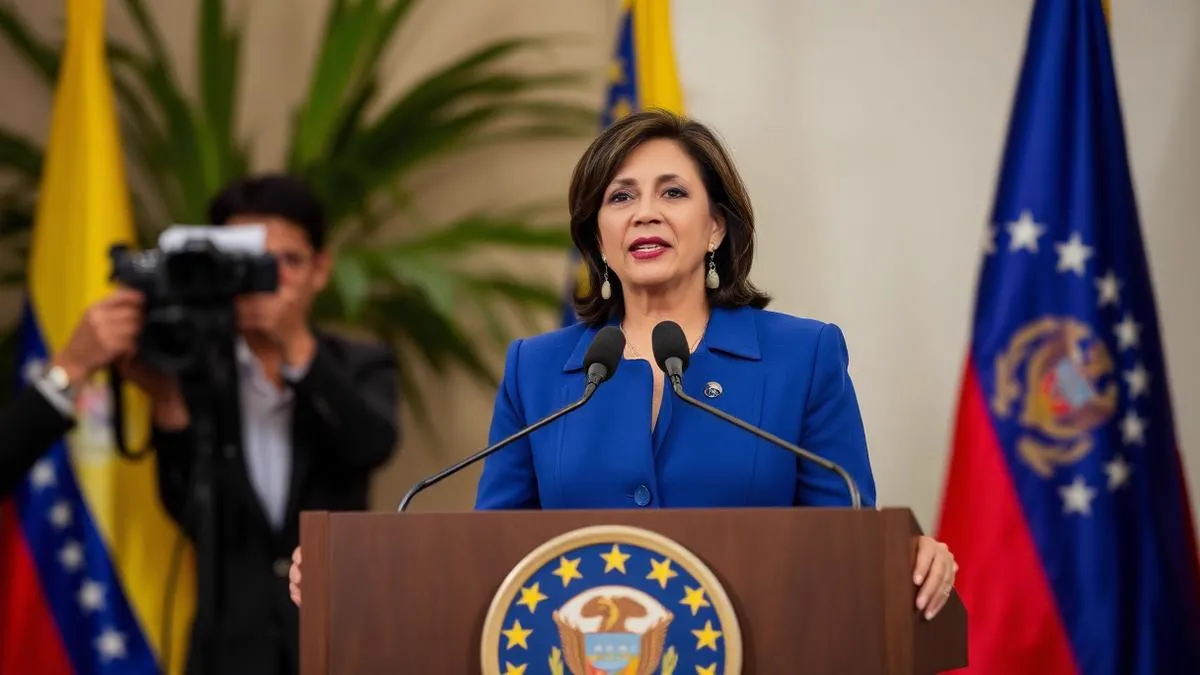
Major diplomatic U-turn in Washington. The Trump administration announced on April 2nd the lifting of personal sanctions against Delcy Rodríguez, Venezuela's Vice President who became interim president since the capture of Nicolás Maduro by US special forces in January 2026. This decision marks the most explicit recognition to date of Rodríguez's authority by the United States.
Delcy Rodríguez, 56, a lawyer trained at the Central University of Venezuela, had been on the US Treasury's sanctions list since 2018 for her role in suppressing the opposition and dissolving the National Assembly. Her removal from this list lifts the freeze on her assets in the United States and authorizes financial transactions with American entities.
For analysts, this gesture is part of the Trump administration's strategy to stabilize Venezuela after the chaos caused by Maduro's arrest. 'Washington needs a credible interlocutor in Caracas, and Rodríguez is the only figure within Chavismo capable of keeping the state apparatus functioning,' explains a Latin American diplomat on condition of anonymity.
The Venezuelan opposition, led by María Corina Machado from her exile in Miami, has strongly criticized the decision. 'Lifting sanctions against Maduro's direct accomplice is rewarding tyranny,' she stated in a press release. Human rights organizations, including Human Rights Watch, have expressed similar reservations, recalling the regime's record of repression.
On the economic front, the lifting of sanctions paves the way for a resumption of Venezuelan oil exports to the United States – a crucial issue in a context of high crude oil prices. Venezuela possesses the world's largest proven oil reserves (303 billion barrels), but its production has fallen to 800,000 barrels per day, down from 3.5 million in 1998, due to chronic underinvestment.