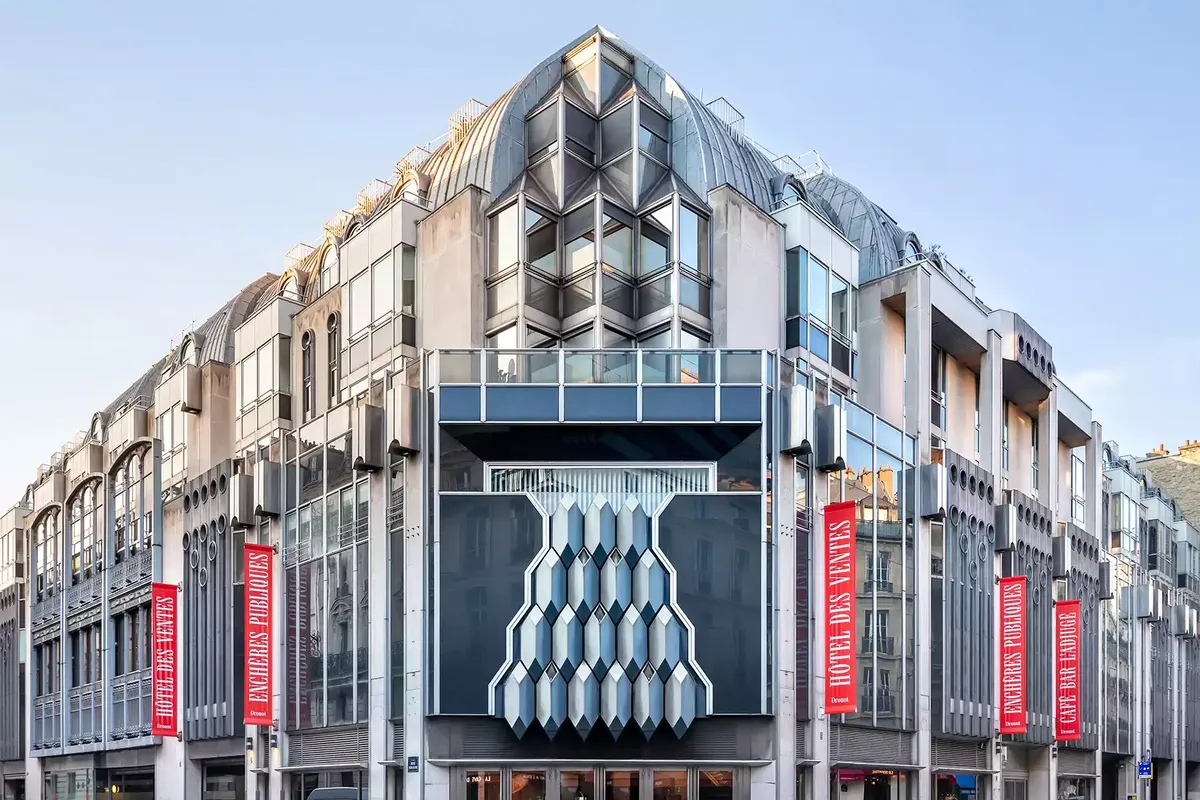
Hôtel Drouot, located at 9 rue Drouot in Paris's 9th arrondissement, is the oldest and largest auction center in the world. Founded in 1852 under Napoleon III, it derives its name from Count Antoine Drouot, an artillery general of Napoleon I. Every year, over 600,000 items are sold in its 16 auction rooms, generating a business volume exceeding 400 million euros. More than 70 auction houses—including Artcurial, Aguttes, Millon, Piasa, and Tajan—organize about 2,000 sales per year, making Drouot a unique institution worldwide: a shared space where dozens of independent auctioneers operate.
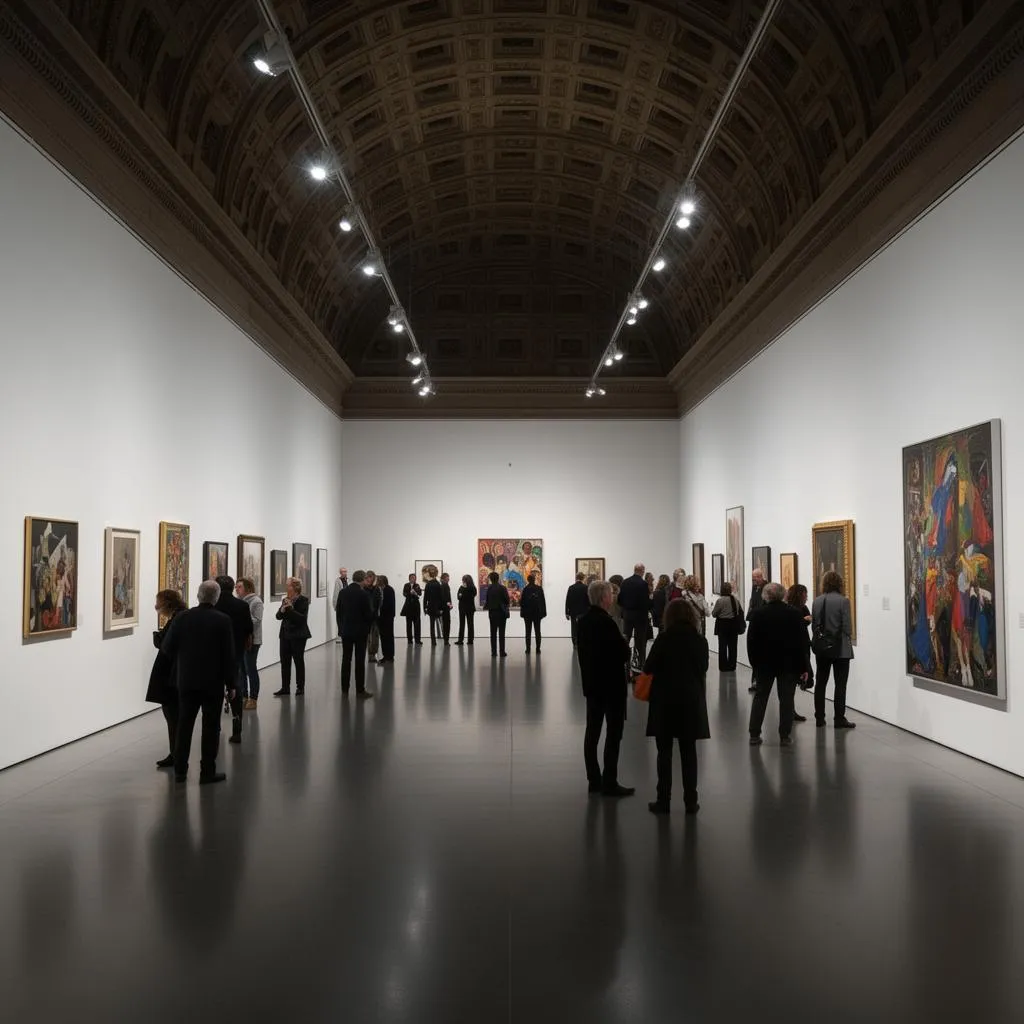
The history of Drouot is intimately linked to that of the French art market. The current building, rebuilt between 1976 and 1980 by architects Jean-Jacques Fernier and André Biro after the demolition of the 19th-century former Hôtel, was entirely renovated in 2023-2024 at a cost of 25 million euros. This modernization introduced hybrid rooms allowing for simultaneous in-person and online auctions via the Drouot Digital platform, which now attracts buyers from 180 countries. Despite this digital transformation, the soul of Drouot remains intact: free public exhibitions before each sale allow anyone to touch, examine, and dream over the offered items, from master paintings to Louis XV furniture, antique jewelry, and rare wines.
Drouot is the kingdom of diversity. Unlike Christie's or Sotheby's, which specialize in high-end items, Drouot offers lots at all price points—from 10 euros for a lot of antique tableware to several million for an Impressionist masterpiece. In 2025, a painting attributed to Caravaggio was sold for 12.3 million euros, while an illuminated medieval manuscript fetched 4.7 million. However, the majority of sales concern accessible items: Art Deco furniture, Japanese prints, tribal art, vintage photographs, musical instruments, antique books, and scientific curiosities. This democratization of auctions makes Drouot a place of passion as well as commerce.
The French auction market, of which Drouot is the beating heart, represents 3.8 billion euros in 2025, placing France fourth globally behind the United States, China, and the United Kingdom. The rise of online auctions has transformed the sector: 45% of sales at Drouot are now made through remotely connected bidders, compared to only 15% in 2019. The Drouot Digital platform offers a permanent catalog of over 30,000 searchable lots, with AI-powered estimation tools and personalized alerts by category. This hybridization of tradition and technology allows Drouot to reach a new generation of collectors, younger and more international.
Beyond sales, Drouot is a true cultural ecosystem. La Gazette Drouot, a weekly newspaper founded in 1891, remains the bible of the art market in France with 50,000 subscribers. The Drouot district, nicknamed the 'golden triangle of antique dealers,' houses dozens of galleries, experts, and art restorers in the adjacent streets. The auctioneers who operate at Drouot are ministerial officers appointed by the Keeper of the Seals, guaranteeing the transparency and legality of every transaction. In 2026, Drouot launched a residency program for young auctioneers and a partnership with the École du Louvre to train the next generation of art market professionals. The institution remains a living symbol of French cultural heritage and a bridge between the past and future of the global art market.