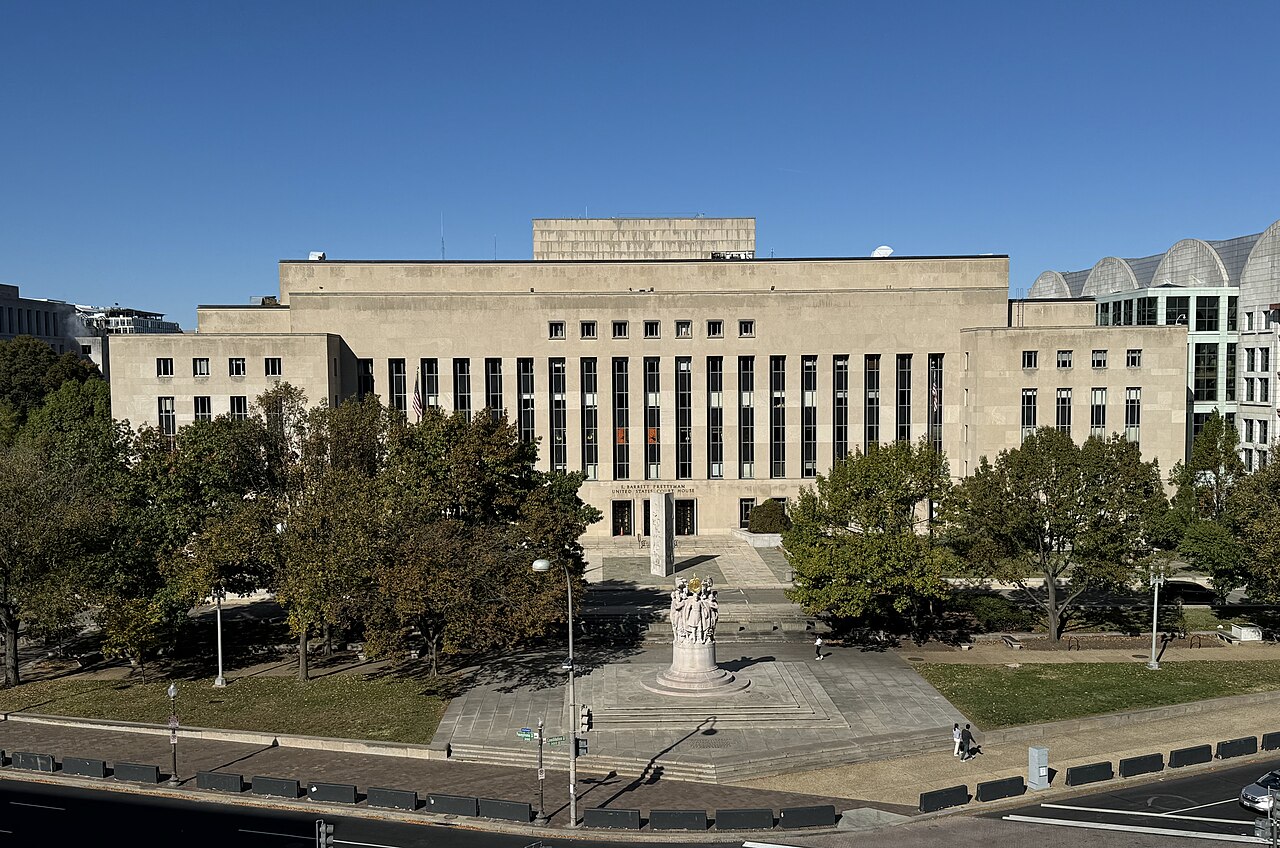
He stepped forward in handcuffs, clad in standard orange attire from the U.S. Marshals Service. On Monday, April 27, 2026, in the mid-morning, Cole Tomas Allen, 31, from Torrance, California, made his first appearance before a federal judge in the District of Columbia, at the E. Barrett Prettyman United States Courthouse in Washington. The brief hearing solely concerned notification of preliminary charges: attempted assault on a federal officer, unlicensed firearm possession in the District of Columbia, attempted armed entry into a Secret Service-covered event. Interim U.S. Attorney Edward Martin indicated that additional charges—including the federal designation of attacking a high-ranking official—could be added in the coming days as the investigation progresses.
A Political Manifesto at the Heart of the Investigation
The element that escalated the case is called a "manifesto." According to CBS, The Wall Street Journal, and NPR, FBI investigators recovered a multi-page document from Cole Allen's hotel room at the Washington Hilton, which he allegedly sent to the Trump family hours before the attack. The text, whose exact content has not been made public, reportedly contains serious personal accusations against the president—accusations that Donald Trump firmly denied on Sunday night on Truth Social, calling them "abject fabrications" and labeling the suspect a "mentally unbalanced individual." The Department of Justice refused to comment on the manifesto's content but confirmed it was a "central element" of the ongoing investigation.
Presidential Security Questioned
Beyond Cole Allen's profile, the event confronts federal services with a structural question: how did a man armed with a shotgun, a handgun, and several knives manage to breach the first armed cordon of the Washington Hilton on the night of one of the year's most closely watched dinners? An internal Secret Service investigation, opened on Sunday, is expected to deliver its initial findings within ten days. According to the Associated Press, several check-in procedures at hotels hosting the president or his close associates could be thoroughly reviewed. A National Security Council meeting scheduled for Tuesday, April 28, will address the entire presidential public schedule for the coming months—notably the 2026 World Cup and several UFC fights that Donald Trump wishes to attend.
Trump: 'Consequential Presidents Are More Endangered'
In a lengthy message posted Sunday night and supplemented by a recorded statement released Monday morning, Donald Trump linked the incident to his personal project for a 90,000-square-foot presidential ballroom, which he believes will "protect the president and the entire administration" from security risks. The project, stalled for several months by federal judge Kathleen Williams due to funding issues, is an emblematic political dossier of the second term. "Consequential presidents are always more endangered," Trump told reporters as he left Mar-a-Lago. The statement, immediately picked up by conservative networks, was also criticized by several Democratic lawmakers who denounce a "political instrumentalization" of the attack.
A Democracy Under Constant Tension
The sequence initiated by the April 25 shooting is unfolding within an inflammable American political atmosphere. Since the failed attack in Butler, Pennsylvania, in July 2024, which targeted Donald Trump, several security incidents have been reported. The climate of polarization, fueled by the war with Iran, the standoff with the Supreme Court over executive orders, and the transatlantic rupture with London, leads federal services to fear an increase in individual acts of violence. According to an internal FBI memo revealed by CNN on Monday, direct threats against the president and high-ranking federal officials have increased by 47% in the first quarter of 2026 compared to the same period last year. The feeling that the American presidential institution has itself become a vulnerable target has never been stronger since the 1960s.
Editorial Opinion
The attack at the Washington Hilton, Cole Allen's arrest, and the discovery of his manifesto, taken together, form a grave precedent in American political life. The exact content of the document—which Trump denies and the Department of Justice will likely not publish—paradoxically becomes secondary. What matters is that an isolated man, equipped to kill, managed to penetrate the perimeter of one of the year's most heavily guarded presidential dinners. The failure is primarily operational; it is also, more profoundly, a symptom of a democracy struggling to protect its own rituals. No architectural wall, however large, will suffice if political radicalization is not itself addressed head-on. This is political, cultural, and media work—not just security. And this is likely where the sequence opened by Cole Allen will be the most difficult to close, because it requires not a real estate project, but a collective de-escalation effort that the current climate makes almost impossible in the short term.
Key Takeaways
- Cole Tomas Allen appears before a federal judge in Washington (Prettyman Courthouse) on Monday, April 27, 2026.
- A political manifesto addressed to the Trump family was found in his hotel room.
- Trump denies allegations in the manifesto, calling them 'fabrications'.
- Internal Secret Service investigation opened; conclusions expected within 10 days.
- Threats against high-ranking federal officials: +47% in Q1 2026 (FBI/CNN memo).