
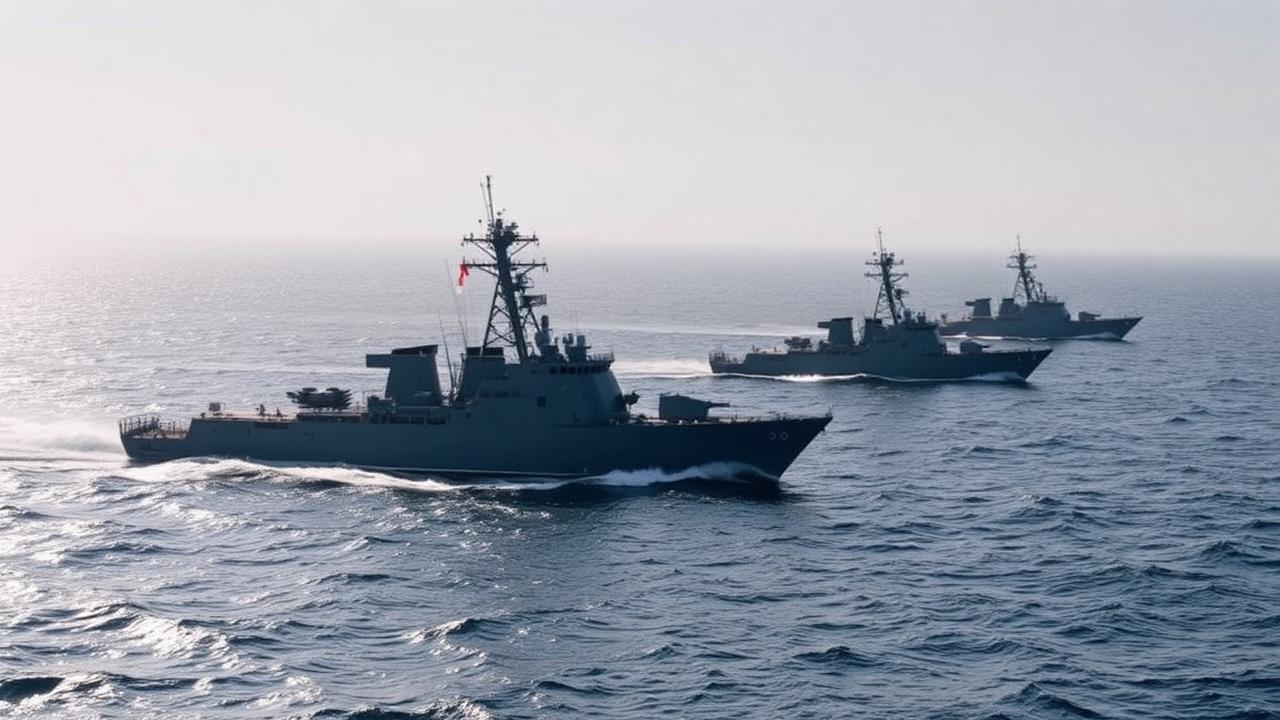
The U.S. Central Command (CENTCOM) officially activated a mine clearance mission in the Strait of Hormuz on Saturday, April 11, 2026, marking the first crossing of U.S. warships in this strategic passage since the escalation of the conflict with Iran. Two Arleigh Burke-class destroyers transited the strait and operated in the Persian Gulf, CENTCOM announced on its social media channels, specifying that "additional forces, including underwater drones, will join the mine clearance effort in the coming days."
Trump: "All Iranian mine-laying ships have been sunk"
President Donald Trump posted on social media that the United States had "begun clearing the Strait of Hormuz" and that "all Iranian mine-laying ships have been sunk." This statement, reported by Reuters and Army Times, has not been independently confirmed. The Pentagon confined itself to confirming the mine clearance operation without commenting on the presidential claims about the destruction of the Iranian mine-laying fleet.
Iran denies any crossing
Tehran's reaction was immediate and contradictory. The Islamic Revolutionary Guard Corps (IRGC) denied that any U.S. crossing had taken place, calling CENTCOM's announcements "propaganda." This denial, highlighted by CBS News, is interpreted by analysts as an attempt not to appear powerless in the face of a military operation in waters that Iran considers its "strategic backyard." The Strait of Hormuz, 33 km wide at its narrowest point, is the most critical bottleneck for global oil trade: approximately 21 million barrels transit through it every day.
Mine clearance capability in question
According to an NPR report from April 1, 2026, experts question the U.S. Navy's actual ability to conduct mine clearance operations in the Persian Gulf. The U.S. Navy's mine countermeasures program has historically suffered from chronic underfunding, overshadowed by more headline-grabbing weapon systems. The aging Avenger-class mine warfare ships have been gradually replaced by systems on board Littoral Combat Ships (LCS), whose reliability is disputed. The use of autonomous underwater drones, announced by CENTCOM, could represent a technological turning point in this field.