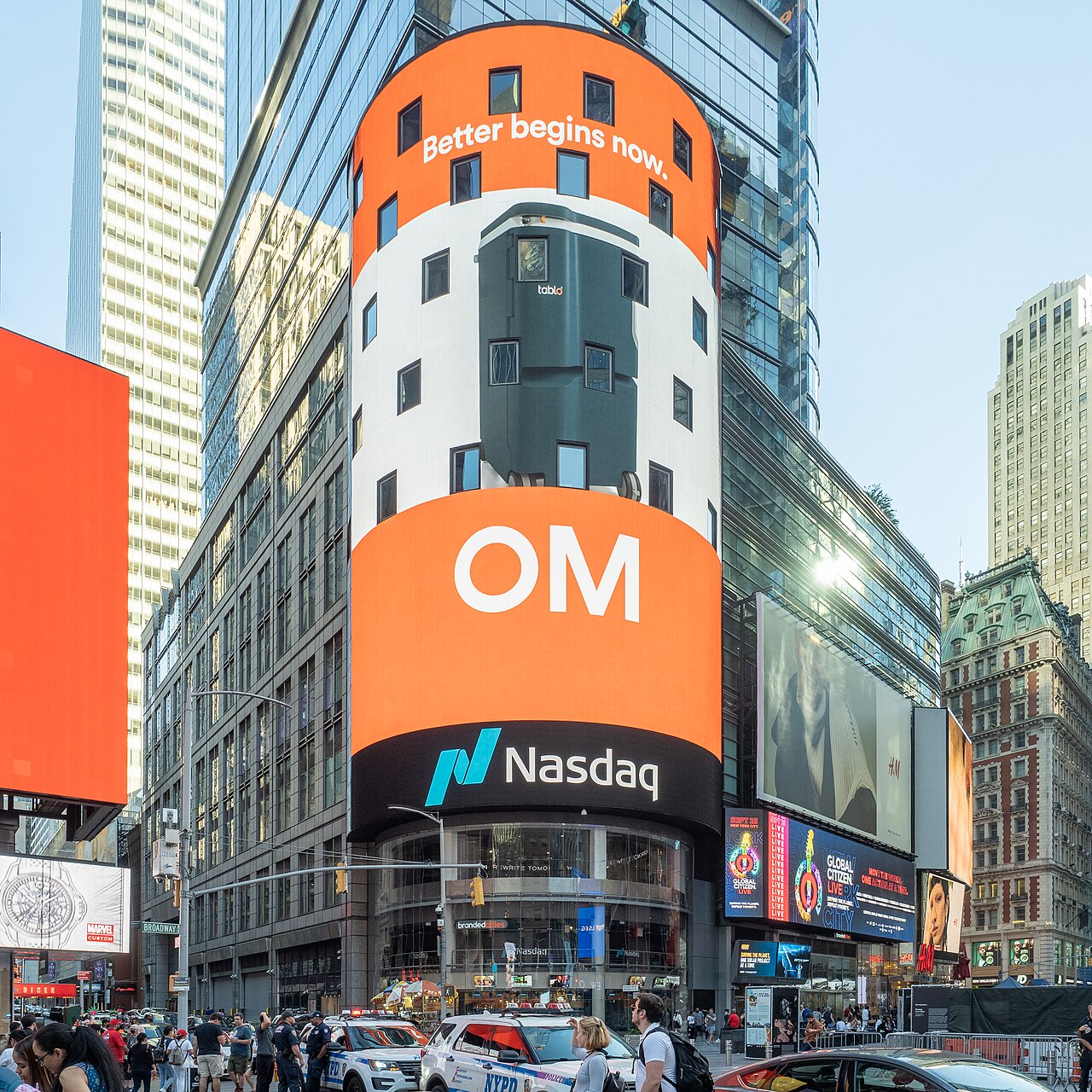
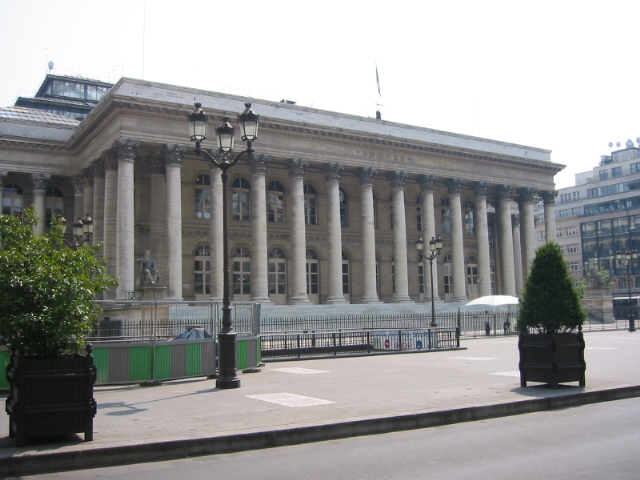
The quarterly earnings season is doing its job in Paris, but New York is playing a different tune. The Paris Stock Exchange remained in positive territory throughout the morning on Thursday, April 23, 2026, despite an opening initially expected to be down given Middle Eastern uncertainty. At the opening, the CAC 40 was up 0.37% at 8,186.95 points, a gain of around thirty points. Wall Street, on the other hand, was trading down at the New York midday: the Dow Jones was down 0.40%, the S&P 500 and Nasdaq were also trending downwards, under the double impact of disappointing corporate earnings and the persistence of the standoff between Washington and Tehran after ship seizures in the Strait of Hormuz.
Hermès, Air Liquide, and Schneider Electric Lead Paris
On the Parisian market, several stocks are dominating the session. Hermès International, whose quarterly revenue confirmed the resilience of the high-end luxury sector, is pulling the index up, driven by sales in Asia. Air Liquide is gaining ground thanks to operating income above expectations and a revision of annual forecasts upwards. Schneider Electric is progressing after solid commercial announcements in the data center segment in Central Europe. Conversely, STMicroelectronics is falling sharply after disappointing results in the automotive sector, and several cyclical stocks exposed to long-term rates are retreating.
Wall Street: Caution Prevails
In New York, the mood is much more mixed. The New York Stock Exchange is trading down on Thursday, concerned by a string of disappointing corporate earnings and renewed nervousness in the Middle East. Around 13:50 GMT, the Dow Jones was down 0.40%. Several quarterly publications have disappointed, particularly in manufacturing and semiconductors. The rise in long-term US rates and the oil risk premium are also weighing on valuation multiples. A few tech stocks are holding up, but the leading index of large caps is generally declining, without however succumbing to panic.
Oil Hovers Around $100
The environment remains tense. The Brent barrel was trading around $100 on Thursday, up marginally from Wednesday, after hitting a peak overnight following the seizure of Iranian ships in Hormuz. The US WTI is trading slightly below. According to Goldman Sachs analysts, the 'risk premium' linked to the Iranian situation currently represents about $14 per barrel, without which Brent would trade around $86. The bank maintains its central scenario of $90 a barrel by the end of June, but with a non-negligible probability of a new peak in the event of a major incident in the strait.
Bond Market Reflects Caution
In the bond market, the yield on 10-year US Treasury bonds remains around 4.2%, reflecting investor caution in the face of the double whammy of oil inflation and fragile earnings. The French 10-year OAT is trading around 3.4%, the German Bund slightly above 2.4%, and the Franco-German spread remains stable. Operators are now closely monitoring the upcoming meetings of the ECB and the Fed, looking for signals on the direction of key interest rates.
Macroeconomic Indicators Send Mixed Signals
Statistics published Thursday morning present a mixed picture. Preliminary PMI indices for the Eurozone confirm moderate expansion in services and a timid recovery in manufacturing. In Germany, the Ifo business climate index is recovering. In the United States, the labor market remains robust, with controlled unemployment claims. But these good news are partly overshadowed by geopolitical uncertainty: Donald Trump's decision to extend the truce with Iran has not dispelled fears of an uncontrolled escalation in the Strait of Hormuz.
Editorial Opinion
The session of April 23 illustrates an old but often forgotten truth: markets do not rise in unison. Paris is holding thanks to the quality of European quarterly publications and its lesser exposure to Iranian risk. Wall Street, on the other hand, is paying for a string of disappointing results and geopolitical nervousness. This dichotomy is healthy as long as it lasts, but it also reminds us that the resilience of European indices remains largely borrowed from the earnings cycle: a single missed industrial publication or an exogenous shock—a serious incident in the Strait of Hormuz, an unexpected sovereign default, a collapse of the Chinese real estate market—will be enough to brutally reverse sentiment. For now, operators are choosing to believe in Donald Trump's strategic patience and the strength of European luxury margins. It's a reasonable bet, but not a risk-free one. Prudence dictates maintaining a significant portion in cash and gold, two underweighted safe havens since the April peak.
Key Takeaways
- CAC 40 up 0.37% to 8,186.95 points Thursday morning, driven by quarterly results.
- Wall Street down: Dow Jones -0.40% at midday, under pressure from publications and the Middle East.
- Hermès, Air Liquide, and Schneider Electric lead Paris; STMicro falls after disappointing results.
- Brent around $100, Iranian risk premium estimated at $14 per barrel according to Goldman Sachs.
- 10-year US T-Notes around 4.2%, French OAT at 3.4%, ECB and Fed under close scrutiny.