
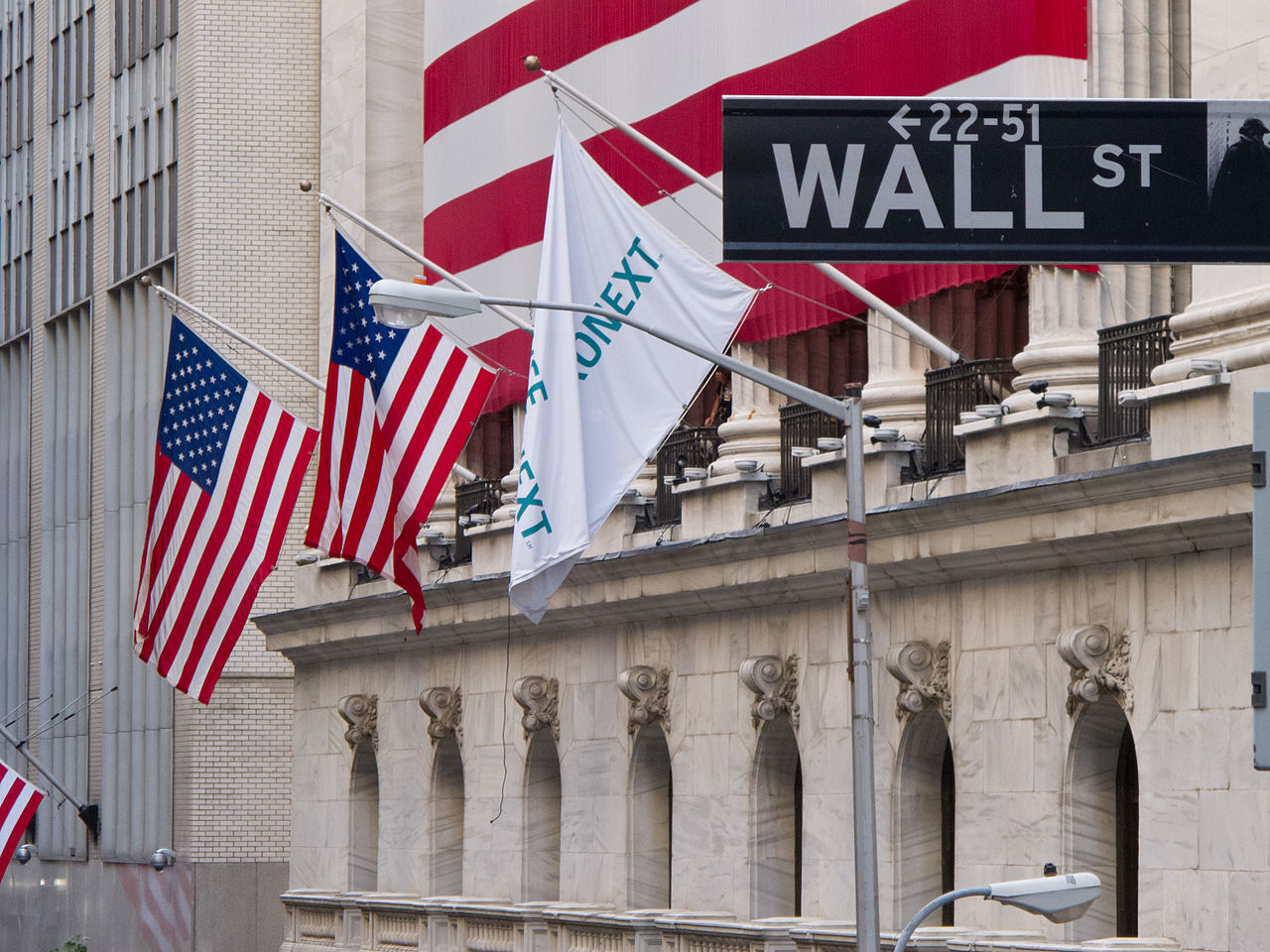
Financial markets have decided to believe in the truce. On Wednesday, April 22, 2026, the S&P 500 was up 0.9% at the opening, on its way to an all-time record high, at 6,312 points in early New York trading. The Dow Jones gained 0.7%, the Nasdaq 1.1%, and the small-cap Russell 2000 surged 1.8%. In Paris, the CAC 40 recovered 1.3% to 8,435 points, fully erasing the losses of the previous two sessions. Brent crude was down 3.1% at $100.40 a barrel, compared to a peak of $117 last week. The cocktail of an extended truce + a maintained oil blockade paradoxically reassures traders: it combines reduced immediate military risks with the continued existence of a risk premium on energy.
GE Vernova, Boston Scientific, and Boeing in the Spotlight
Three stocks are particularly driving the New York market, according to Associated Press. GE Vernova jumped 6.4% after reporting quarterly earnings that beat expectations: revenue reached $8.9 billion, up 14%, driven by gas turbine orders and offshore wind. Boston Scientific gained 4.1% thanks to an upward revision of its annual forecasts for cardiological devices. Boeing advanced 3.2% after an agreement with Emirates for the early delivery of 25 Boeing 777X aircraft and confirmation from the FAA of the lifting of restrictions on the 737 MAX 9. The defense sector, however, lost some ground: Lockheed Martin fell 1.8%, RTX 1.3%.
Oil: The Risk Premium Erodes But Doesn't Disappear
In the energy market, the situation is more nuanced. While Brent crude fell below the symbolic $100 mark, several analysts believe the geopolitical risk premium remains high. Helima Croft, head of commodity strategy at RBC Capital Markets, estimates the 'Iran' premium incorporated into the current price at $18: without the war, Brent would be trading around $82. Goldman Sachs maintains a target range of $95 to $110 by the end of June, betting on a precarious status quo. Hedge funds, meanwhile, reduced their long oil positions by 22% in seven days, according to ICE data published Tuesday evening.
CAC 40 Cautious Despite Rebound
In Paris, the market is recovering but remains underperforming compared to Wall Street. TotalEnergies fell 2.1% with the drop in crude oil. Conversely, Air France-KLM jumped 5.3%, as jet fuel has fallen 8% in three days. Luxury stocks also rebounded: LVMH advanced 1.9%, Hermès 1.4%, Kering 2.8%. French banking stocks were mixed: BNP Paribas rose 0.4%, Société Générale slipped 0.2%, Crédit Agricole gained 0.7%. The yield on 10-year OATs eased by 4 basis points to 3.21%, indicating that traders now anticipate a monetary status quo from the ECB until September.
Crypto and Gold: Retreat of the 'Safe Havens'
Logically, safe-haven assets are suffering. The ounce of gold fell 1.9% to $2,678, after hitting a record high of $2,770 last week. Bitcoin lost 2.4% to $96,800, and Ether declined 3.1% to $3,412. The yen, another classic refuge, depreciated by 0.8% against the dollar to 154.2 yen. The Swiss franc fell 0.5% to 0.891 per dollar. Massive portfolio shifts towards risky assets reflect a partial return of risk appetite, but volumes remain 15% below the three-month average, according to Bloomberg.
The 'Headfake' Scenario to Watch
The main risk, identified by JP Morgan strategists in a note published this morning, is that of a 'headfake': a technical market rebound fueled by immediate easing, followed by a sharp correction at the slightest incident in the Strait of Hormuz. The put-call ratio on the S&P 500 stands at 0.72, its lowest level since February, signaling an accumulation of hidden bearish positions. Of particular note: the weekly US oil inventory report due this Wednesday at 4:30 PM, and the speech by Iranian President Massoud Pezeshkian scheduled for Thursday morning.
Editorial Opinion
The market rebound is understandable but likely excessive. The geometry of the current truce — no negotiated peace, maintained economic blockade, cornered Iranian regime — dangerously resembles that of August 1990 between Saddam Hussein and the Western coalition, six months before Operation Desert Storm. Aggressively buying the market at this level is a bet that rationality will prevail in Tehran. It's a costly bet. Our advice to retail investors: take advantage of the rebound to reduce exposure to cyclical sectors (energy, air transport, automotive), maintain a defensive pocket (healthcare, staple goods, utilities), and keep a cash buffer of 10 to 15% of the portfolio to seize potential dislocations to come.
Key Takeaways
- S&P 500 heading for a new record at 6,312 points, CAC 40 recovers 1.3% to 8,435 points.
- Brent crude falls below $100 (-3.1%), geopolitical risk premium estimated at $18.
- GE Vernova (+6.4%), Boston Scientific (+4.1%), and Boeing (+3.2%) lead Wall Street.
- Gold and Bitcoin retreat, signaling a partial return of risk appetite.
- Iranian President Pezeshkian's speech expected Thursday: a key variable to watch.