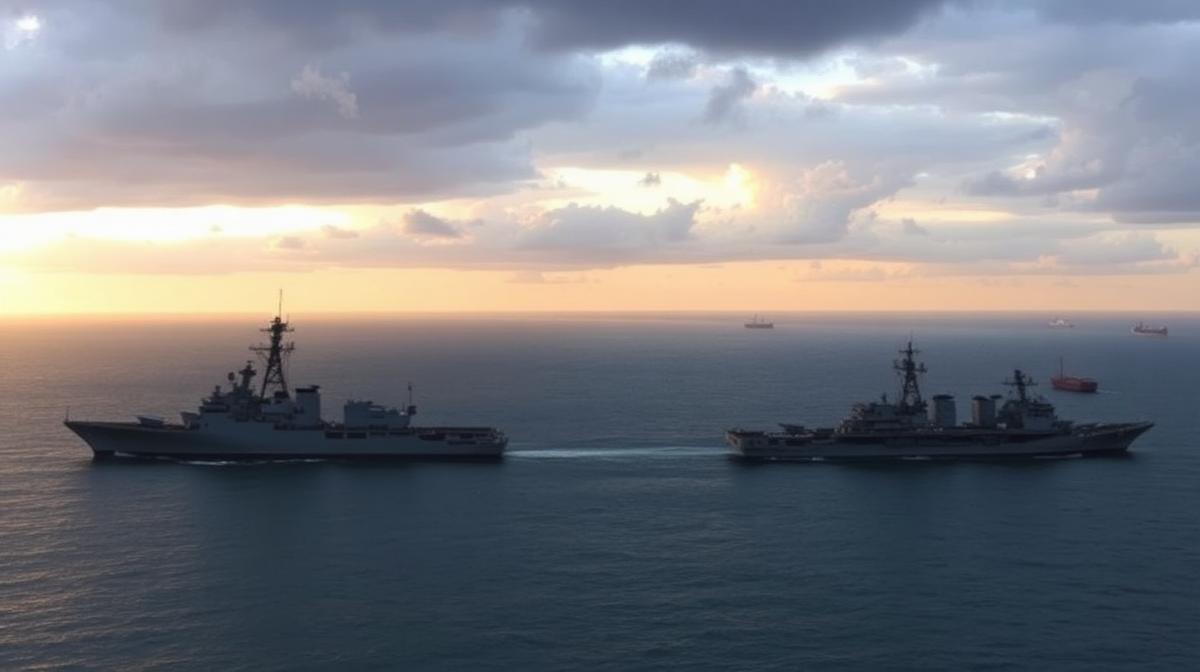
The U.S. Central Command (CENTCOM) announced on Monday, April 13, 2026, the official launch of the blockade of all Iranian ports, following the failure of the Islamabad negotiations the previous weekend. According to the Associated Press, maritime traffic in the Strait of Hormuz is now virtually halted, an unprecedented situation since the Iran-Iraq war of the 1980s. President Donald Trump stated that the objective was to "clear the Strait of Hormuz of mines" and prevent Iran from "profiting from the control of this crucial waterway."
Unprecedented Escalation
The blockade represents a major escalation in the conflict. Channel News Asia reports that U.S. warships, including Arleigh Burke-class destroyers and an aircraft carrier, are now patrolling the entrance to the strait. Iran, through the Islamic Revolutionary Guard Corps (IRGC), immediately reacted by warning that "any military vessel approaching the strait will be considered a violation of the ceasefire and will be treated with the utmost firmness." This threat underscores the risk of a direct confrontation between the two navies.
Global Consequences
The Strait of Hormuz is a strategic bottleneck through which approximately 20% of the world's oil passes. USA Today reports that the two-week ceasefire, already weakened by the failure of the Islamabad talks, is now "in imminent peril." Gulf countries, notably the United Arab Emirates and Saudi Arabia, have called for restraint, fearing the economic consequences of a prolonged blockade. The European Union has convened an emergency meeting of foreign ministers to assess the situation.
Markets Under Tension
Financial markets reacted immediately. CNN Business confirms that oil prices surged above $100 per barrel on Monday morning, with Brent reaching $103 – its highest level since the February escalation. Asian stock markets fell, with the Nikkei losing 1.8% and the Hang Seng down 2.1%. Goldman Sachs analysts warn that if the blockade extends beyond a few days, the barrel could reach $120, with major repercussions on global inflation.