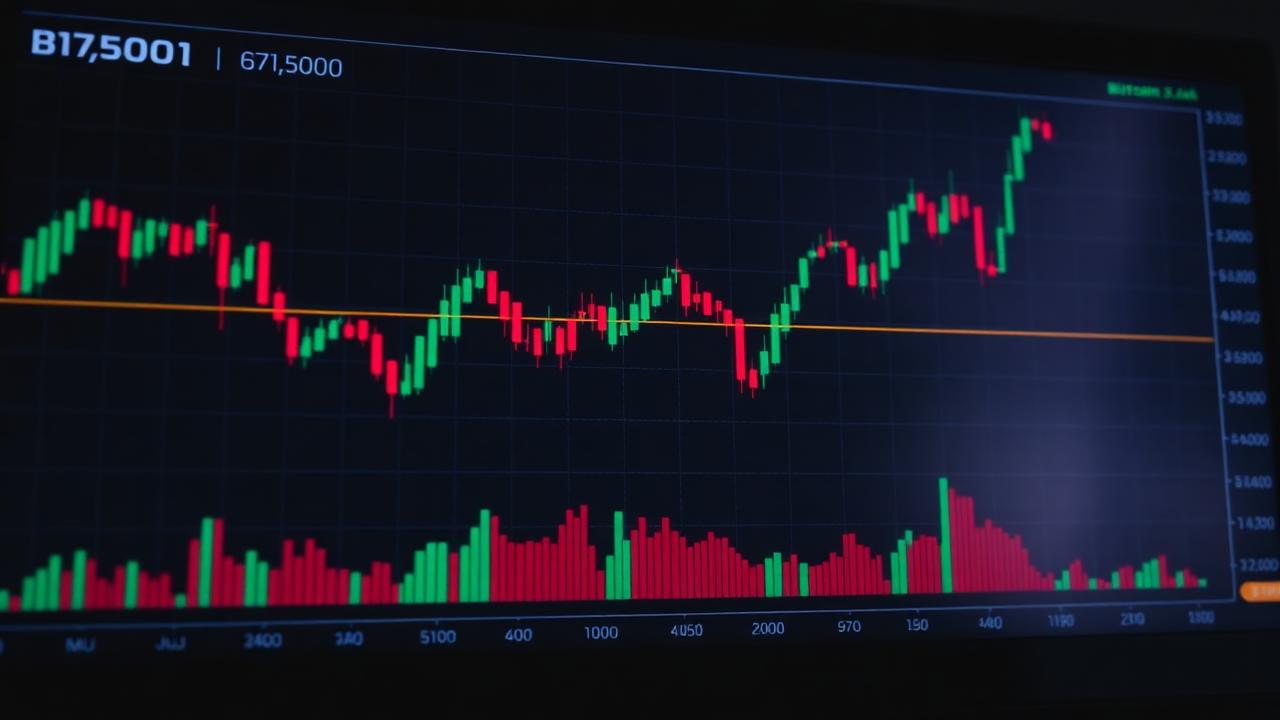
Bitcoin (BTC) was trading at $71,578 this Wednesday, April 8, 2026, a slight decrease of 0.47% compared to the previous day's close ($71,915). The day saw the price fluctuate between a low of $71,231 and a high of $72,110, in a market that remains cautious despite the announcement of a ceasefire between the United States and Iran. Trading volume remained modest, a sign that investors are adopting a prudent stance while awaiting confirmation that the truce will hold. Ethereum is moving in the same trend, around $1,800, while the overall crypto market has a capitalization of approximately $2.3 trillion. (
Since its all-time high of $109,000 reached in January 2025, Bitcoin has lost more than a third of its value. This prolonged correction is due to several converging factors. Firstly, the U.S. Federal Reserve (Fed) has yet to cut its key interest rates in 2026, contrary to market expectations. Persistent inflation, fueled by the oil crisis linked to the Iranian conflict, has forced Jerome Powell to keep rates between 4.25% and 4.50%, making risky assets like Bitcoin less attractive compared to bonds. Secondly, inflows into spot Bitcoin ETFs have slowed: after a record of inflows in 2024-2025, institutional investors have reduced their positions in the face of geopolitical uncertainty. (
The Middle East conflict has had a paradoxical impact on Bitcoin. Contrary to the popular narrative of Bitcoin as a "safe haven" comparable to gold, the cryptocurrency followed stock markets downward during the crisis. When oil prices soared and global stock markets plummeted, Bitcoin fell with them – a behavior that calls into question the decoupling thesis often put forward by crypto proponents. Physical gold, meanwhile, crossed the $3,100 per ounce mark, confirming its status as a safe haven asset in times of crisis. JPMorgan analysts note that Bitcoin "remains a risk asset, correlated with global liquidity conditions, not a substitute for gold." (
On the regulatory front, the environment remains mixed. In the United States, the SEC has maintained its cautious approach under the Trump administration, with a regulatory framework still under development. In Europe, the MiCA (Markets in Crypto-Assets) regulation, which came into effect at the end of 2024, has brought legal clarity appreciated by institutional players but has also imposed compliance costs that have forced some smaller platforms to close. France remains one of the most dynamic European markets for cryptocurrencies, with Binance, Bitpanda, and Coinbase operating under AMF registration. (
What can be expected in the coming months? Analysts are divided. Standard Chartered maintains a target of $120,000 by the end of 2026 if macroeconomic conditions improve (rate cuts, geopolitical détente). Conversely, skeptics – including ECB economists – believe Bitcoin could fall back below $50,000 in the event of a global recession. The next key catalyst will be the 2028 halving, which will cut miners' rewards in half. In the meantime, Bitcoin remains what it has always been: a fascinating, polarizing, and terribly volatile asset – an imperfect but revealing barometer of the world's appetite for risk. (