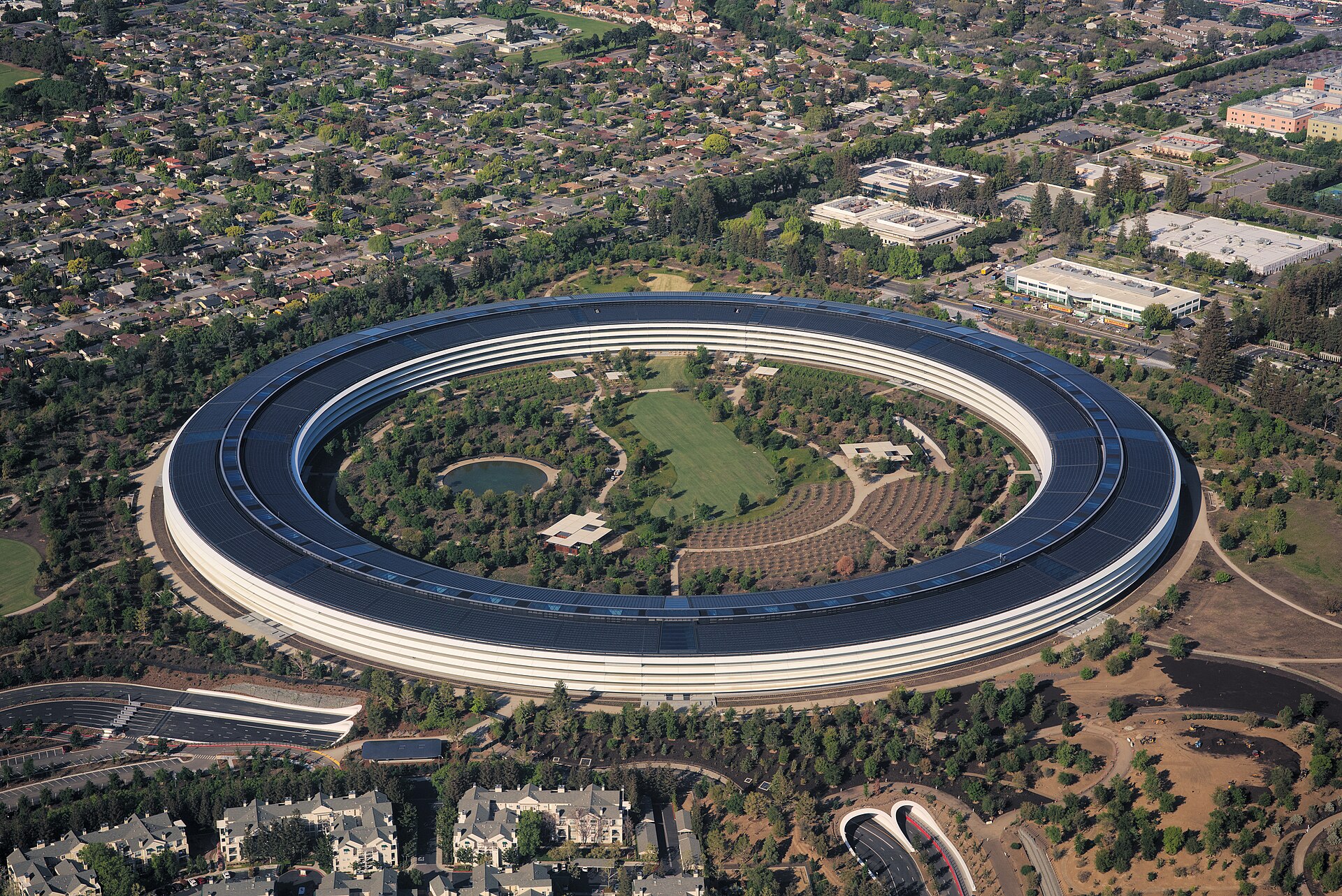
This is undoubtedly the biggest news to shake Silicon Valley since Steve Jobs’ retirement in August 2011. Apple announced on Monday, April 20, 2026, in a press release issued after the US markets closed, that its CEO Tim Cook would step down from his operational duties in early September 2026, after exactly fifteen years leading the group. He will be replaced by John Ternus, 50, who was until now Senior Vice President in charge of hardware engineering – meaning the iPhone, iPad, Mac, Apple Watch, and Apple Vision Pro. Tim Cook, who will then be 65, will become Executive Chairman of the Board, a strategic role but without daily responsibility.
A Colossal Economic Legacy but a Technological Debt
The financial record of Tim Cook's tenure is impressive: Apple's market capitalization has grown from $348 billion in August 2011 to over $4 trillion today, making Cupertino the world's leading company by market value. Annual revenue has multiplied by 3.7, net profit by 4.1, and gross cash reserves are now nearing $200 billion. But behind this brilliant financial success lies a concerning technological lag: according to France 24 and Bien Public, Apple is now clearly far behind OpenAI, Google, Anthropic, Microsoft, and now Meta in generative artificial intelligence. The Apple Intelligence project, presented in June 2024, has never convinced analysts or users.
John Ternus, the Shadow Engineer
Who is John Ternus, suddenly thrust into the spotlight? Born in Philadelphia in 1976 and a graduate in Mechanical Engineering from the University of Pennsylvania, he joined Apple in 2001, during the transition period between the iMac and the future iPod. He successively oversaw the hardware development of the first-generation iPad, the MacBook Pro Retina, the iPhone X, and more recently, the Apple Vision Pro. According to Nice-Matin, his peers describe him as "one of the most respected technical minds in the group, midway between Jony Ive for design and Tim Cook for operational rigor." Discreet in public, never photographed on a keynote stage before 2021, he embodies a generational shift more than a stylistic one.
Why Now?
The question intrigues the entire ecosystem. Tim Cook had never mentioned a departure date, and the board was rumored to intend to keep him until age 70. Three explanations are circulating. The first, official, is that of a succession "naturally prepared over the last three years," according to Apple's press release. The second, hinted at by several internal sources cited by Gate News, reportedly involves underlying tensions between Tim Cook and the board over AI strategy, with some board members reproaching the outgoing CEO for a lack of aggression towards Sam Altman and Sundar Pichai. The third, more prosaic, is simply linked to the fatigue of a leader who will have spent fifteen years on planes between Cupertino, Beijing, New Delhi, and Brussels.
The Challenges Facing John Ternus
The new leader inherits a hot potato: catching up in generative AI without abandoning the "privacy first" DNA that has differentiated Apple for twenty years. Three priority areas are emerging. First, accelerating the release of a proprietary language model capable of operating entirely on the device, in direct competition with Gemini Nano and OpenAI o1-mini. Second, quickly concluding a research partnership with Anthropic or Mistral AI, similar to what Microsoft did with OpenAI. Third, preparing the successor to the Apple Vision Pro, whose disappointing sales – fewer than 600,000 units in the fiscal year – are weighing on the hardware teams' morale. Apple's stock fell 3.2% in after-hours trading following the announcement, indicating some perplexity on Wall Street.
Editorial Opinion
The appointment of John Ternus is, in many respects, the most cautious possible: an in-house engineer, trained in internal processes, without any media fireworks. This is reassuring for the company culture, but it raises a major strategic question. Does Apple, in 2026, need a business-as-usual CEO, or a leader capable of twisting internal culture to drive the AI transformation? The recent history of Microsoft under Satya Nadella shows that a successful technological shift requires disruption at the top. If John Ternus merely manages the legacy, Cupertino risks experiencing the same decade of wandering as IBM in the 1990s. The first six months of his tenure will be decisive.
Key Takeaways
- Tim Cook is stepping down as Apple CEO in early September 2026 after a fifteen-year tenure.
- He will be replaced by John Ternus, 50, former VP of Hardware Engineering.
- Tim Cook will become Executive Chairman of the Board.
- Apple's market capitalization exceeds $4 trillion, but it lags in generative AI.
- Apple stock fell 3.2% in after-hours trading, signaling market perplexity.