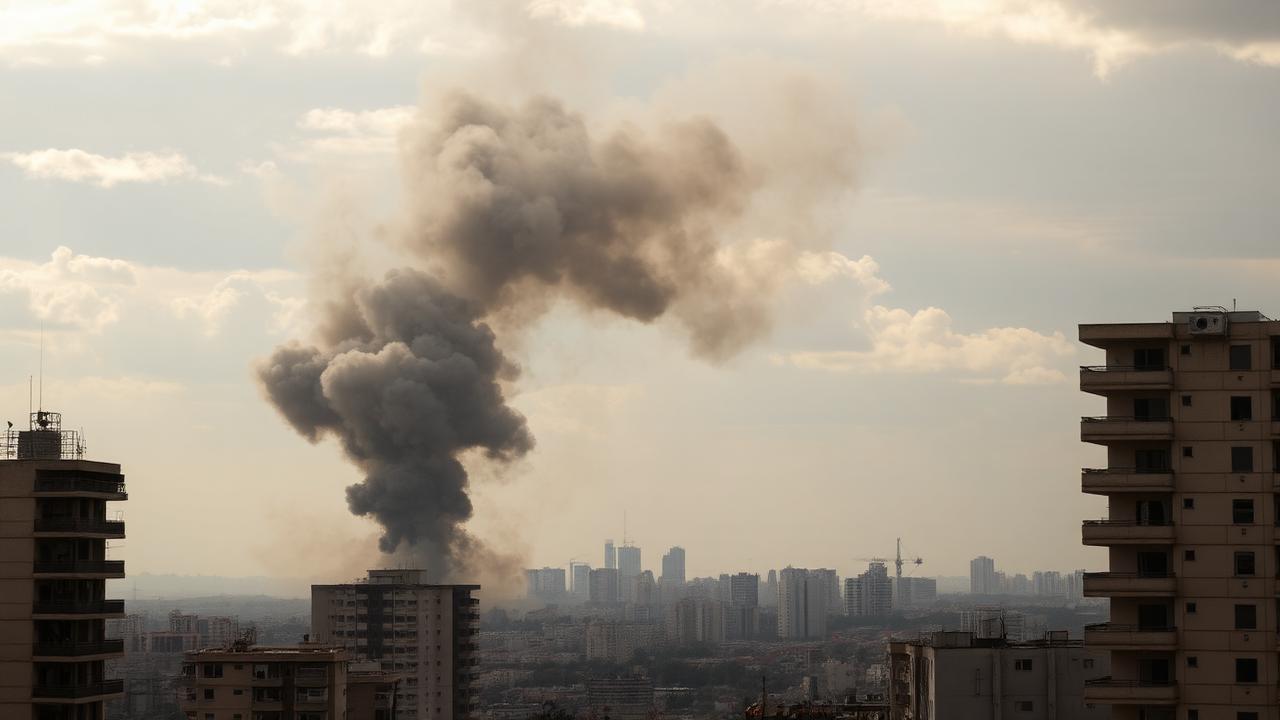
The southern suburbs of Beirut were again targeted by Israeli airstrikes on the evening of Sunday, April 5, 2026, on the thirty-eighth day of the conflict engulfing the Middle East. Columns of black smoke rose above Dahieh, the district historically controlled by Hezbollah, while alarm sirens sounded throughout the Lebanese capital. The IDF claimed responsibility for the destruction of "several command centers and arms depots" of the Shiite movement, an ally of Iran in the conflict.
Lebanon finds itself once again caught in the middle of a conflict that is beyond its control. Since February 28, the date hostilities began between the American-Israeli coalition and Iran, Israel has carried out more than 400 strikes on Lebanese territory, mainly targeting Hezbollah infrastructure but also hitting residential areas. The death toll in Lebanon stands at over 200 dead and 1,500 injured, a majority of whom are civilians according to the Lebanese Ministry of Health. More than 300,000 people have been displaced in the south of the country and in the suburbs of the capital.
The Lebanese government, weakened by years of economic and political crisis, struggles to make its voice heard on the international stage. The Prime Minister denounced a "flagrant violation of Lebanese sovereignty" and called for an emergency meeting of the United Nations Security Council, without achieving concrete results. France, the former mandatory power, reiterated its call for an end to the bombings in Lebanon and proposed sending an interposition force under a UN mandate – a proposal rejected by Israel, which considers Hezbollah an existential threat that must be neutralized.
The Lebanese economy, already in tatters before the conflict, is suffering a new devastating shock. The port of Beirut, partially rebuilt after the 2020 explosion, has seen its activity drop by 60% due to security risks. The tourism sector, which had started a timid recovery in 2025, is at a complete standstill. The Lebanese pound has lost 40% of its residual value since the start of hostilities, and shortages of fuel and medicine are becoming widespread. Humanitarian organizations warn of an imminent food crisis affecting more than 2 million people.
Hezbollah, for its part, maintains its stance of solidarity with Iran. The movement has claimed responsibility for firing more than 300 rockets and missiles at northern Israel since the start of the conflict, causing significant material damage and the evacuation of tens of thousands of Israeli residents. The Secretary-General of Hezbollah reiterated that the movement "will not cease fire until the aggression against Iran and Lebanon ends simultaneously." This position de facto links Lebanon's fate to that of the negotiations between Washington and Tehran, depriving Beirut of any autonomy in resolving the conflict.