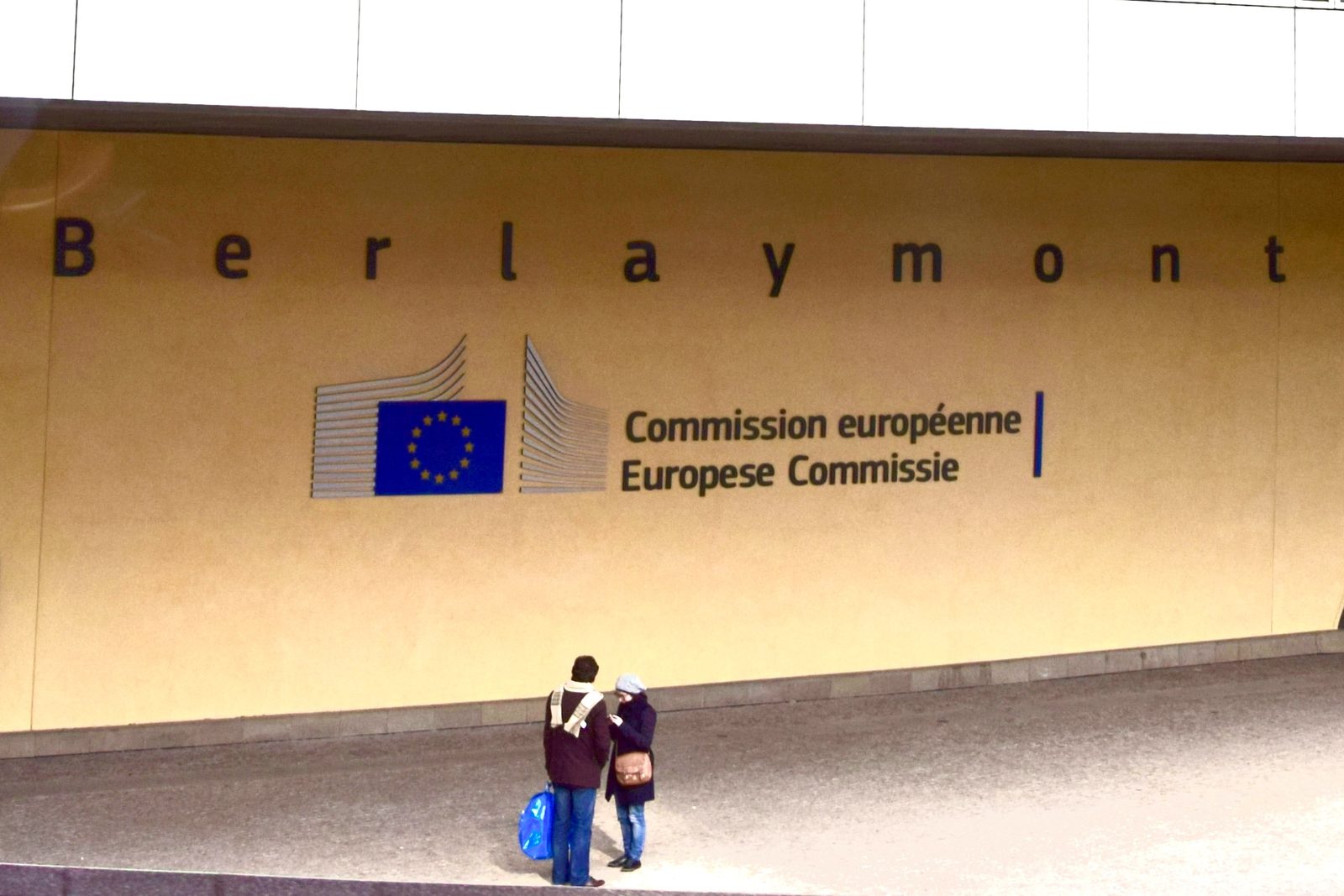
The announcement came shortly after midnight, following a marathon trialogue between the Danish Presidency of the Council, the European Commission, and the European Parliament: a provisional political agreement was reached on Wednesday, May 20, 2026, on the two regulations intended to implement the Union's tariff commitments within the framework of the Framework Agreement signed with the United States on July 27, 2025. An hour later, in Washington, the office of the US Trade Representative confirmed the news, calling the step taken "decisive" for the stability of transatlantic trade.
What the Agreement Contains
The two regulations abolish, effective July 1, 2026, European customs duties on a range of American industrial products, including automotive spare parts, certain aeronautical equipment, several categories of basic chemicals, and – a politically charged symbol – Maine lobster. They also extend until December 31, 2027, the zero-duty quota mechanism established in 2025 for oysters and bourbon, two products that the White House had specifically requested during negotiations. The total number of tariff lines concerned amounts to 1,248, according to a Commission document dated May 19.
A Victory for Ursula von der Leyen
The agreement is above all a personal victory for Ursula von der Leyen, who has been negotiating this file since the working lunch held in Turnberry in July 2025 with Donald Trump. Under pressure for months – accused by liberals of having conceded too much and by conservatives of having dithered too long – the Commission President obtained in extremis the rally of the S&D group, on condition that a safeguard clause be included in the text allowing Brussels to re-impose duties if Washington were to increase its own tariffs on European vehicles or steel. This clause, validated by Sandro Gozi (Renew), constitutes the political lock for the entire agreement.
The American Gesture: 15% Instead of 30%
In return, the United States confirms the capping of its own tariffs on European imports at 15%, down from the 30% threatened by Donald Trump on several occasions in recent weeks. More importantly, the US administration commits to fully exempt Airbus deliveries to United, Delta, and American Airlines from surcharges, deliveries that had been suspended since February. According to Bloomberg, 142 aircraft in the queue should be able to cross the Atlantic over the next eighteen months, a major relief for Toulouse and Hamburg.
European Industry Relieved but Cautious
In Wolfsburg, Volkswagen welcomed a "welcome clarification": the manufacturer exports 28% of its US production from its Mexican and German plants and had feared a new tariff shock. In Sochaux, Stellantis expressed more measured relief, recalling that the gross margin on its exports to the United States remains under pressure. On the French side, the Minister Delegate for Foreign Trade, Laurent Saint-Martin, hailed "an honorable compromise" while emphasizing that the issue of wine and spirits remains excluded from the agreement for now. Bordeaux winegrowers and Cognac distillers will have to wait until the second round of negotiations, scheduled for the fall.
Markets Cheer
At the opening of Wall Street, the S&P 500 was up 0.7%, driven by aerospace and automotive stocks. Boeing gained 1.9%, Airbus 2.4% in Paris, Stellantis 3.1%, Volkswagen 2.2%. The euro climbed to $1.1601, its highest level in three weeks. The CAC 40 rose by 0.56%, the DAX by 0.64%, and the FTSE MIB by 0.87%. Goldman Sachs analysts estimate, in a note published at midday, that the agreement removes approximately 0.3 percentage points from the downside risk for European growth in 2026.
Areas of Uncertainty
The political agreement still needs to be formally confirmed by the Coreper on Friday, May 22, and then adopted in a plenary session of the European Parliament during the June session in Strasbourg. Several Green MEPs and some French parliamentarians from the presidential majority have expressed reservations, particularly regarding the absence of environmental safeguards for imported American beef. On the US side, the text will have to pass the Senate filter, where several Midwest Republicans remain committed to a more aggressive trade policy towards Europe. The political window therefore remains narrow until the summer break.
Editorial Opinion
We must fully appreciate what this May 20, 2026, signifies for the new commercial world. Europe has just accepted, under urgency and threat, an agreement that softens its customs duties far more than it would have wished to do within a classic WTO framework. This is not a diplomatic victory: it is the lesser of two evils. But this lesser evil has an immense merit – it stabilizes, for at least eighteen months, the planet's largest bilateral trade flow, representing nearly 1,600 billion euros in annual exchanges. In the current climate, this is almost a miracle. The challenge now is to transform this respite into a strategy: Brussels must absolutely use the coming months to build, with Southeast Asia and India, solid commercial alternatives to the dual American and Chinese pull.
Key Takeaways
- Wednesday, May 20, 2026: Provisional EU–US political agreement on the implementation of the July 2025 Framework Agreement.
- Elimination of European customs duties on 1,248 American industrial tariff lines as of July 1, 2026.
- Capping of US tariffs on European products at 15% (instead of the threatened 30%).
- Full exemption for Airbus deliveries to US airlines: 142 aircraft unlocked.
- Safeguard clause included in the text at the request of S&D and Renew.
- Markets up: CAC 40 +0.56%, DAX +0.64%, S&P 500 +0.7%, euro at $1.1601.
- Coreper confirmation expected Friday, May 22, European Parliament vote in June.