
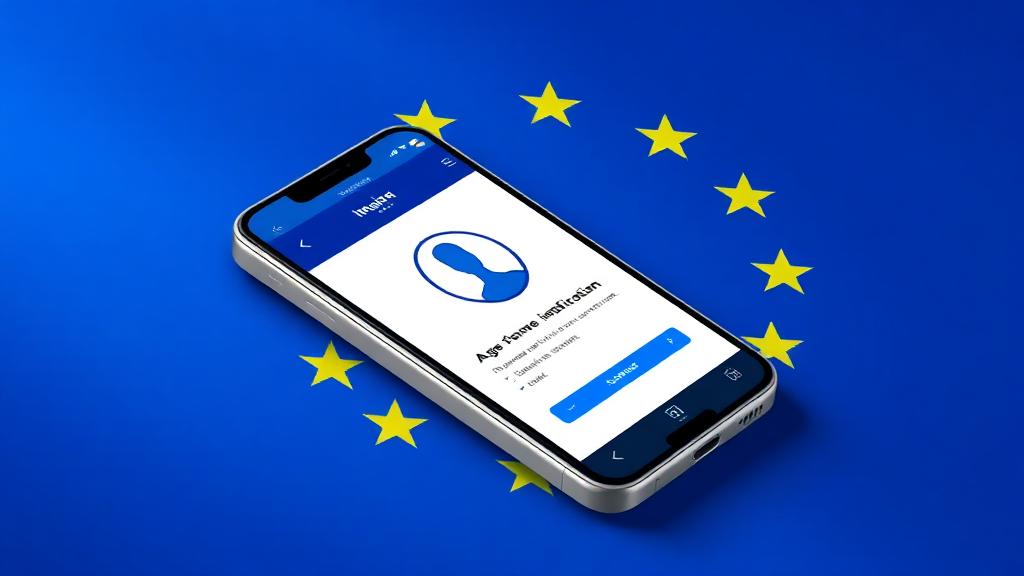
The European Commission has taken a decisive step in protecting minors online. President Ursula von der Leyen and Executive Vice-President Henna Virkkunen announced on April 15 that the European age verification application is "technically ready" and will soon enter a pilot phase with Member States.
Privacy-Respecting Technology
The open-source application relies on zero-knowledge proof technology. Concretely, a user can prove they are over 16 years old without the platform accessing their name, date of birth, or any other personal data. According to Reuters, this approach positions the EU as a global pioneer in privacy-respecting age verification.
A Context of Regulatory Tightening
This initiative is part of the Digital Services Act (DSA) and new European rules aimed at restricting minors' access to social media. In France, a law already mandates age verification for access to pornographic websites, and the debate on banning social media for those under 15 remains very active in the National Assembly.
Next Steps
The application will enter a pilot phase in several European countries in the second half of 2026. No binding minimum age has yet been harmonized across the EU, but the tool can be voluntarily adopted by platforms. According to The Next Web, digital giants like Meta, TikTok, and Snapchat are already in discussions with the Commission to integrate the system.