The document went online on the SEC's website shortly after 4:03 PM West Coast time on Wednesday, May 20, 2026. A few minutes later, TechCrunch published the first analysis. On the morning of Thursday, May 21, SpaceX's S-1 became the number one subject of the global financial press, from Wall Street to Singapore. The manufacturer founded in 2002 by Elon Musk has officially initiated the process to become, in a few weeks, the largest Initial Public Offering in the history of the markets.
Key Figures from the Prospectus
The 528-page document filed with the Securities and Exchange Commission reveals financial data that has been closely guarded until now. For the 2025 fiscal year, SpaceX reported $18.7 billion in revenue—a threefold increase in three years, primarily driven by Starlink, the satellite constellation which now has 6.8 million paying subscribers. However, these revenues are accompanied by a net loss of $4.9 billion for the year, and a cumulative deficit reaching $41.3 billion. The balance sheet also holds a surprise: $1.29 billion in treasury stock in the form of 18,712 bitcoins as of March 31, 2026. Financial debt amounts to $60 billion, primarily linked to the construction of Starbase and the development of Starship.
A Vertiginous Target Valuation
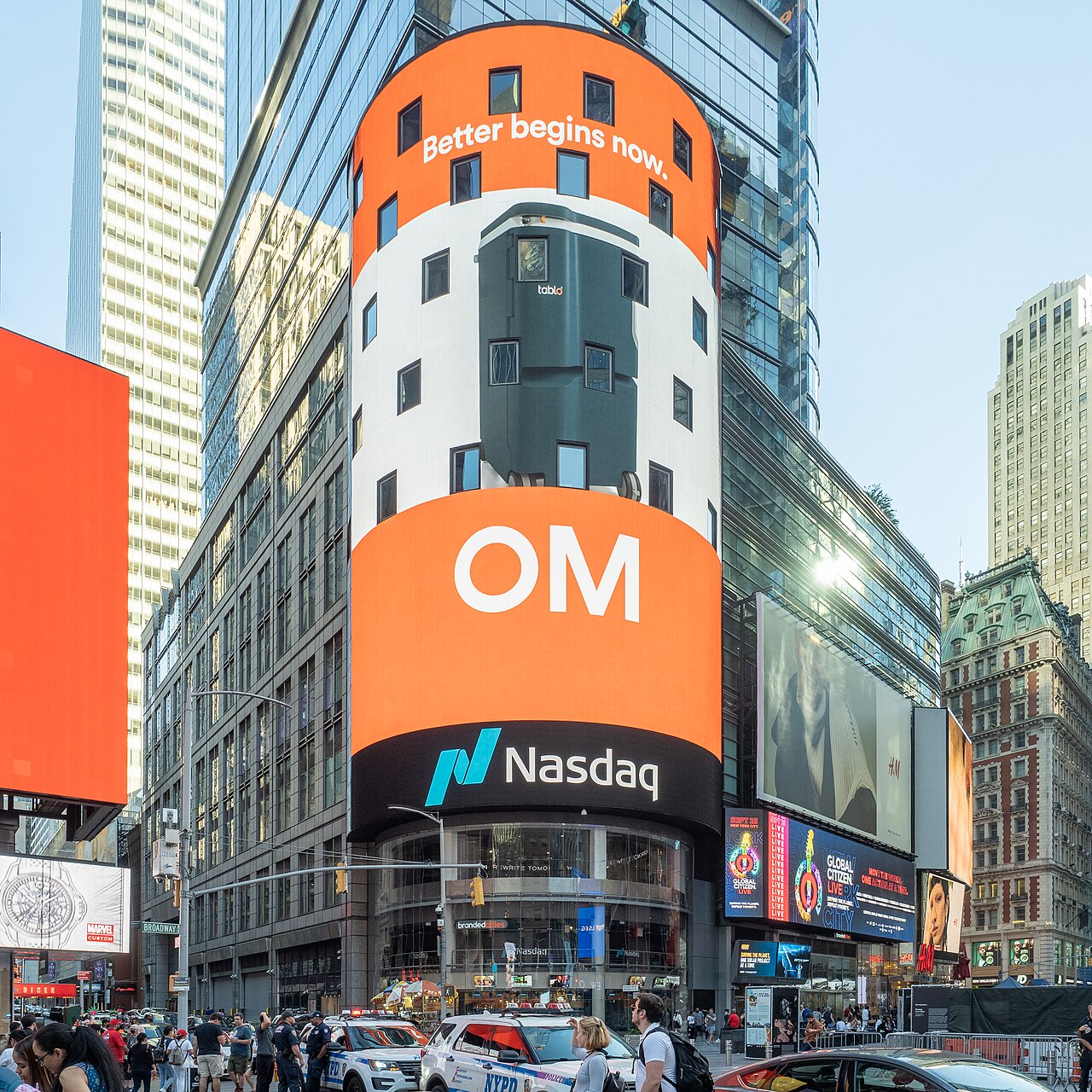
The objective mentioned in several banking analyses, notably relayed by Zonebourse, Le Figaro, and Euronews, revolves around $2,000 billion, equivalent to Apple's current market capitalization. If confirmed, this valuation would make SpaceX's IPO the largest ever—surpassing the current record held by Saudi Aramco in 2019 ($29.4 billion raised). The stock ticker under which the shares will be listed on Nasdaq has not yet been publicly disclosed in the prospectus. According to initial leaks, the operation aims to raise around $30 billion, less than 2% of the capital, to minimize dilution for Elon Musk himself.
Governance Structure: Musk Locks It Down
This is one of the most commented-on revelations in the prospectus. Following the operation, Elon Musk will hold the positions of CEO, CTO, and Chairman of the Board. Most importantly, he will possess Class B shares with multiple voting rights, guaranteeing him 78% of the voting rights for only 41% of the economic capital. A structure inspired by Meta and Google, but taken to an unprecedented level of concentration for a public company of this size. Several institutional investors, including the California Public Employees' Retirement System (CalPERS) and Norway's NBIM, have already expressed their concerns.
The Stakes: Starlink, xAI, and Starship
The prospectus dedicates 87 pages to describing the three pillars of the business. Starlink, now the group's financial engine, generates $14.1 billion in annual revenue and $3.2 billion in operating cash flow. The Direct-to-Cell service, which enables satellite connectivity for standard smartphones, became commercially available to the public in March 2026 and has 2 million users. The xAI division, integrated at the end of 2024 through a contested merger, on the other hand, lost $6.2 billion in 2025; Anthropic, mentioned in the S-1, pays SpaceX $15 billion over five years to rent its computing power. Starship, finally, presented as the major strategic project, has not yet reached full reusability but the company anticipates a Mars mission as early as 2028.
The Operation's Timeline
According to Euronews, citing the prospectus itself, the roadshow could begin fifteen days after the document's publication, i.e., on Thursday, June 4, and the IPO is likely to occur on Friday, June 12, 2026. The banking syndicate is led by Goldman Sachs—appointed lead underwriter according to information from CNBC, as reported by Euronews on May 20—supported by Morgan Stanley, JP Morgan, and Allen & Company. The Saudi sovereign wealth fund PIF, already a long-term investor, is among the expected major subscribers.
Lingering Questions
Two areas of uncertainty remain in the prospectus. The first concerns SpaceX's reliance on U.S. government contracts: NASA, the Pentagon, and the NRO together represent $4.2 billion in revenue in 2025, or 22% of the total. A change in administration or an antitrust investigation—like the one opened by the FCC in April regarding frequency allocation for Starlink—could have a significant impact. The second concerns the valuation attributed to xAI in the 2024 merger: the SEC may request additional information before giving its final approval. Several analysts, including Morningstar, are already advising caution and referring to an "aspirational valuation."
Editorial Opinion
One should not confuse the admiration SpaceX inspires—undoubtedly having revived the Western space industry—with the prudence required in the face of this IPO. The figures speak for themselves: $18.67 billion in revenue in 2025, yes, but accompanied by substantial losses and a valuation that assumes growth rates worthy of the tech sector's golden years. Adding Elon Musk's ultra-centralized governance—special class shares with 10 votes per share—the yet-to-be-proven Starship bet, and the regulatory uncertainty surrounding Starlink, we have one of the most complex filings ever submitted to the markets. However, for a major investor, not participating in this operation is equivalent to foregoing the primary listed vehicle for exposure to the new space economy. Our conviction: it will be necessary to buy, but sparingly, and to accept considerable volatility for at least two years.
Key Takeaways
- Wednesday, May 20, 2026: SpaceX files its S-1 with the SEC.
- Target listing on Nasdaq, with a target valuation around $2,000 billion (ticker not yet announced).
- $18.67 billion in revenue in 2025.
- Starlink: 10,000 satellites, 10 million users in 150 countries, $4.4 billion in operating income.
- xAI recorded $6.4 billion in operating losses in 2025 according to the prospectus.
- Governance: shares with 10 votes per share, Musk will retain dominant control.
- Indicative timeline: roadshow on June 4, probable listing on June 12, 2026; Goldman Sachs lead underwriter.