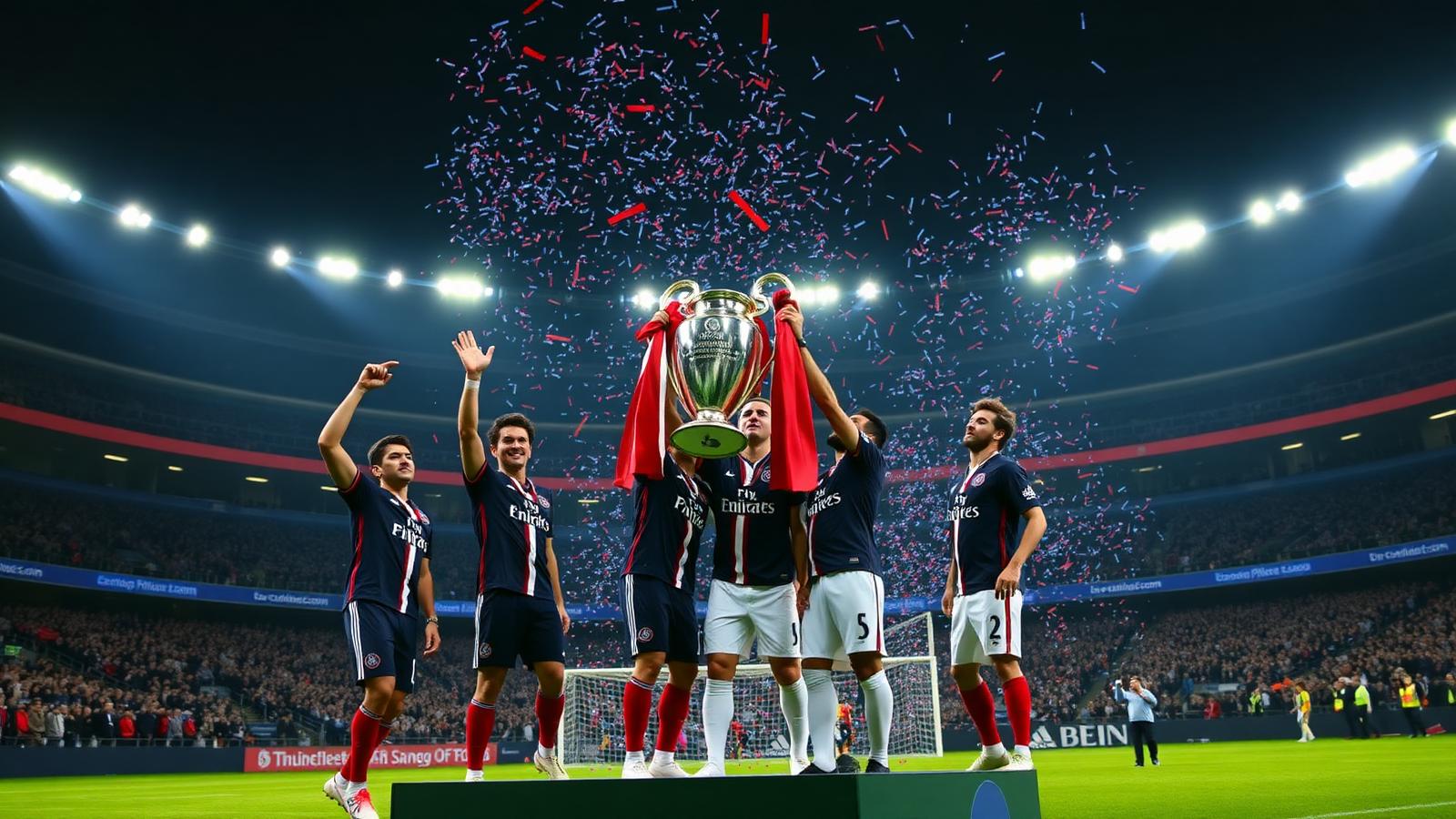
Paris Saint-Germain enters the annals of European football with a second consecutive Champions League title. However, on the streets of France, the night of May 30th to 31st, 2026, once again revealed the impossible equation between popular jubilation and maintaining order.
Budapest, May 30th: The Night Paris Made History
At the Puskás Aréna in Budapest, Paris Saint-Germain and Arsenal battled fiercely for 120 minutes. After a 1-1 draw following extra time, a penalty shootout crowned the Parisians: 4-3. The back-to-back is real. PSG thus joins the very exclusive club of clubs that have won two consecutive European titles, alongside Real Madrid, Bayern Munich, and Internazionale.
In mere seconds, the news set social media ablaze, as well as the Champs-Élysées, Porte de Saint-Cloud, and the areas surrounding the Parc des Princes. As in 2025, and after every major victory, the capital plunged into an ambivalence that France still struggles to resolve: collective joy and its dark side.
The Night of Disturbances: +32% Arrests Compared to 2025
The Minister of the Interior presented the toll of the night's incidents on Sunday: 780 arrests across France, a 32% increase compared to the celebrations that followed PSG's first European title last year. 57 law enforcement officers were injured. Two deaths are to be mourned—a motorcyclist killed in an accident on the Parisian ring road amidst the celebrations, and a knife attack in Dax.
> "It's becoming serious; what we saw in Paris is both irresponsible and catastrophic." — Alexandre Bernard, representative of UMIH Paris Île-de-France.
Material damage is significant: looted shops in Châtelet-Les Halles, Montparnasse, and several troubled neighborhoods of the capital, damaged cars near the Parc des Princes, a car on fire on the Avenue de la Grande Armée. The representative of the Union of Trades and Industries of the Hotel Business called for accountability from the Ministry of the Interior and requested the cancellation of the festivities planned for the following day.
A Day of Celebration Despite Everything: 100,000 at the Champ-de-Mars
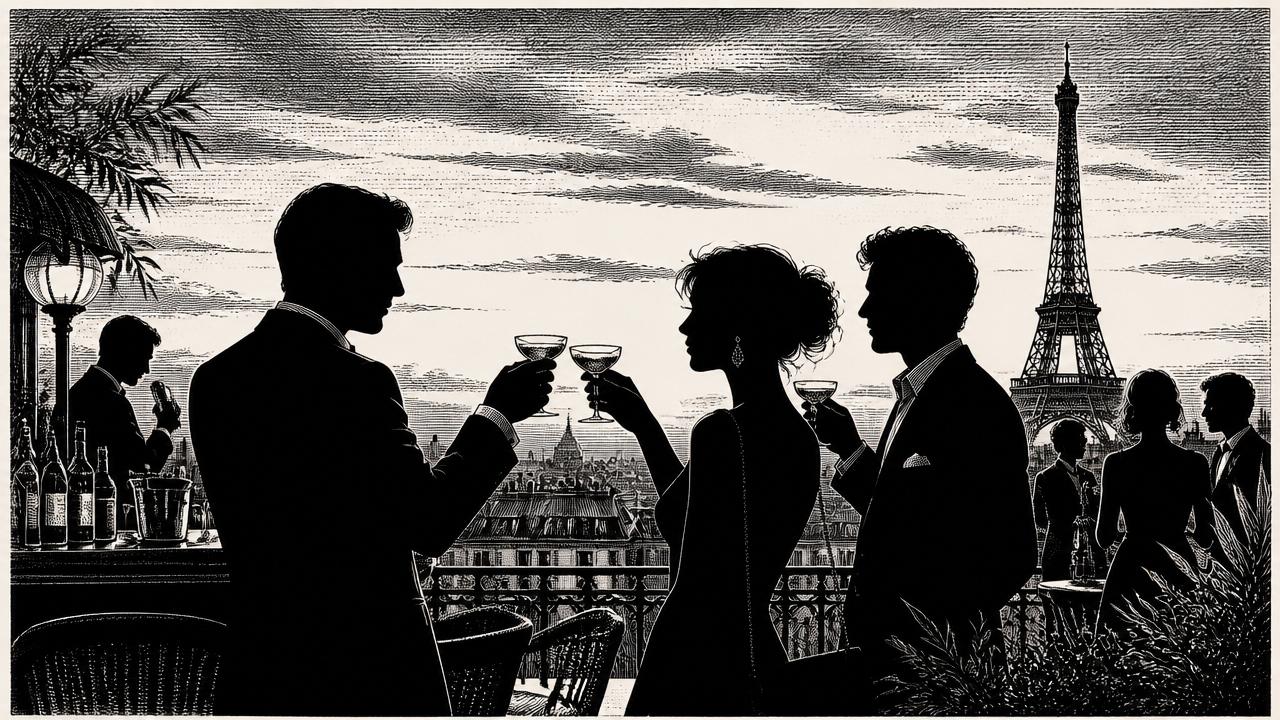
The police prefecture deployed nearly 6,000 officers to secure June 1st. At the Champ-de-Mars, at the foot of the Eiffel Tower, 100,000 fans welcomed the players. RATP temporarily renamed three metro stations for the occasion: "Champions d'Europe," "Paris est magique," and "Rue du Back 2 Back"—a nod to the Rue du Bac station.
Emmanuel Macron received the players at the Élysée Palace around 7 PM. "This PSG team is a great team, and without a doubt, after this back-to-back, it is the greatest team in Europe," the President declared. The evening then continued at the Parc des Princes with Big Ali, Fally Ipupa, and rapper SDM.
The Recurring Question: Can a Popular Victory Be Secured?
The pattern repeats with troubling regularity. Every major triumph for PSG seems to generate a fringe of violence that escapes all prevention measures. 780 arrests in one night represent a colossal burden for law enforcement, correctional courts, and businesses that personally bear the cost of the damage. The Ministry of Urban Affairs announced its intention for "much stronger penal responses." This discourse, too, we have heard before.
The real question is not about security but social: why does a club's sporting victory become, for a minority, a pretext for destruction? The answer extends far beyond the football stadium.
Editorial Opinion
A club enters a dynasty, a country rediscovers that it does not know how to celebrate its own victories. The coexistence of these two scenes—a jubilant Champ-de-Mars, looted Châtelet—is not inevitable, but it will not be defused by an increase in police numbers: it requires a city policy that France has been deferring for thirty years.
To Remember
- Champions League Final in Budapest, May 30th, 2026: PSG–Arsenal 1-1 (a.e.t.), 4-3 on penalties.
- Second consecutive title; PSG joins the club of European back-to-back winners.
- 780 arrests in France (+32% vs. 2025), 57 police officers injured, 2 deaths.
- 100,000 supporters at the Champ-de-Mars on June 1st; reception at the Élysée Palace.
- 6,000 officers deployed; three metro stations temporarily renamed by RATP.