
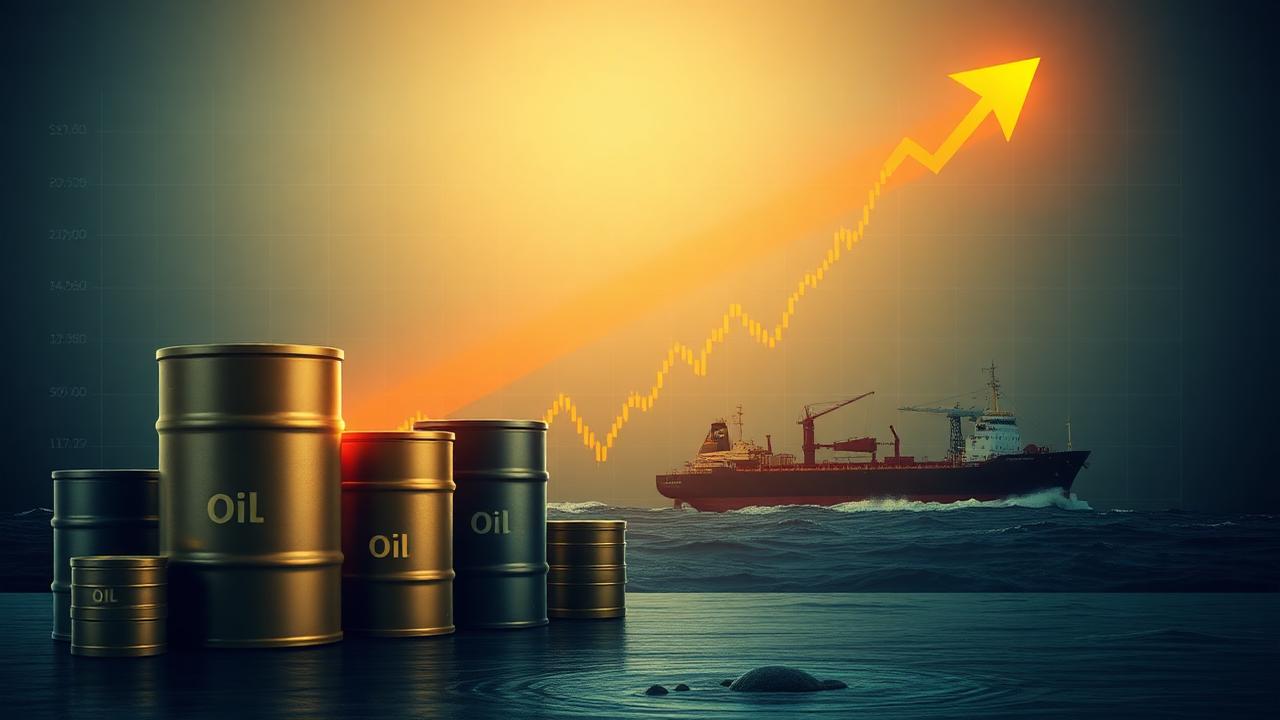
The global oil market is entering a zone of major turbulence. Brent crude oil reached $118.40 a barrel during Asian trading on Monday, April 6, 2026, its highest level since October 2022, propelled by the convergence of three explosive factors: the persistent closure of the Strait of Hormuz for thirty-eight days, an Israeli strike on the South Pars petrochemical complex, and Donald Trump's ultimatum setting a 48-hour deadline before further "massive destructions." US WTI followed suit, settling at $114.70.
The International Energy Agency (IEA) reacted by recommending its twenty-nine member countries proceed with a coordinated release of their strategic reserves amounting to 2 million barrels per day. This exceptional measure, the largest since the IEA's creation in 1974, aims to partially offset the loss of 17 million barrels daily that usually transit through the Strait of Hormuz. The United States has already drawn 45 million barrels from its Strategic Petroleum Reserve since the conflict began, bringing stocks to their lowest level since 1984.
The consequences for at-the-pump prices are now visible across all importing countries. In France, the liter of diesel fuel has surpassed 2.10 euros, a historic record. In the United States, the average price of a gallon of regular gasoline has reached $4.85, a level that fuels social discontent and could weigh on electoral prospects. In Japan and South Korea, governments have implemented emergency subsidies to limit the impact on households. India, the world's third-largest oil importer, has declared a "state of energy emergency" and negotiated direct purchases with Russia and Venezuela at preferential prices.
Analysts at Goldman Sachs and JPMorgan have raised their oil price forecasts for the second quarter of 2026 to $125 and $130 a barrel, respectively, assuming the conflict extends beyond April. The most pessimistic scenario—an intensification of strikes after Trump's ultimatum expires Tuesday evening—could push Brent beyond $150, a level that would almost certainly trigger a global recession according to economic consensus. The last time oil sustainably exceeded $140, in 2008, the global financial crisis followed.
Faced with this energy crisis, calls for an accelerated transition to renewables are multiplying. The UN Secretary-General stated that the Hormuz crisis must serve as a "definitive wake-up call" to reduce global dependence on hydrocarbons. The European Union announced the release of an additional 15 billion euros for its REPowerEU plan, while China has accelerated the construction of five nuclear power plants by advancing their delivery schedules by six months. In the short term, however, no alternative can replace the flows from Hormuz: the world remains captive to its oil dependency.