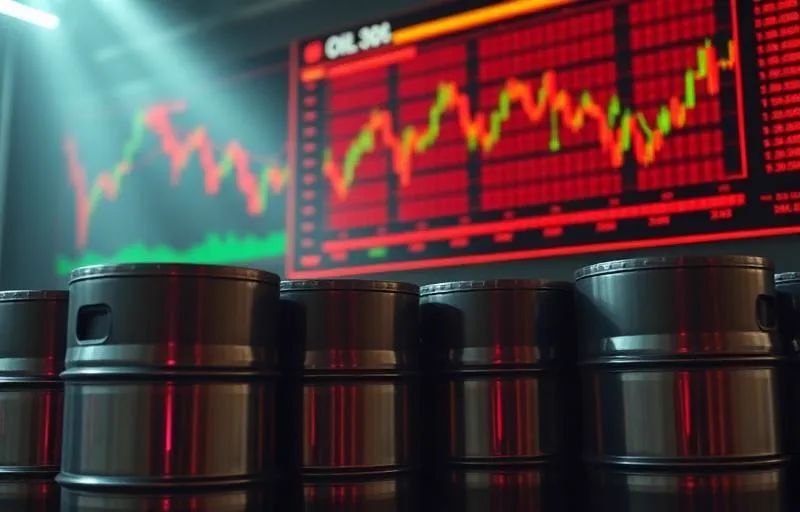
Oil prices surged on Thursday, April 2, 2026, amidst high volatility caused by Donald Trump's national address on Iran. Brent climbed $4.88 (+4.8%) to $106.42 per barrel, and West Texas Intermediate (WTI) rose $4.17 (+4.2%) to $104.29 per barrel, according to data from Reuters and Bloomberg. During trading, both benchmarks had surged over 7% before paring their gains. (
The main catalyst for this surge: Trump's promise to hit Iran "extremely hard" in the next two to three weeks. This statement swept away hopes for a swift ceasefire that had sent prices plummeting the previous day. Brent had lost nearly 8% on Wednesday morning on rumors of negotiations, before soaring again after the speech. (
The Strait of Hormuz is central to the equation. This 33-kilometer-wide maritime passage between Iran and Oman handles approximately 21 million barrels of oil per day, or 20-25% of global consumption. Trump conditioned any ceasefire on its reopening, stating that the strait "will naturally open" at the end of the conflict, or the United States would "force it open." Iran struck a Kuwaiti oil tanker off Dubai and Kuwait City airport in retaliation. (
Goldman Sachs analysts raised their Brent forecast to $115 per barrel for the second quarter of 2026, up from $95 previously, citing the risk of prolonged supply disruption through the Strait of Hormuz. Morgan Stanley anticipates a "stress scenario" that could push oil beyond $130 if the conflict intensifies and the strait is closed. (
The consequences are being felt beyond oil markets. Global stock markets declined: the CAC 40 lost 1.8%, the DAX 2.1%, and the S&P 500 opened down 1.5%. European natural gas prices jumped 12%. Airlines, including Air France-KLM and Lufthansa, announced additional fuel surcharges. In France, a liter of SP95 crossed the 2-euro mark for the first time since 2022. (
The French government of Prime Minister Sébastien Lecornu convened an inter-ministerial meeting on Wednesday morning to address the impact of the oil price surge on purchasing power. Compensation measures – a freeze on the domestic tax on energy products (TICPE), a fuel check for low-income households – are under consideration, according to Matignon. Inflation could rise again if the conflict prolongs. (