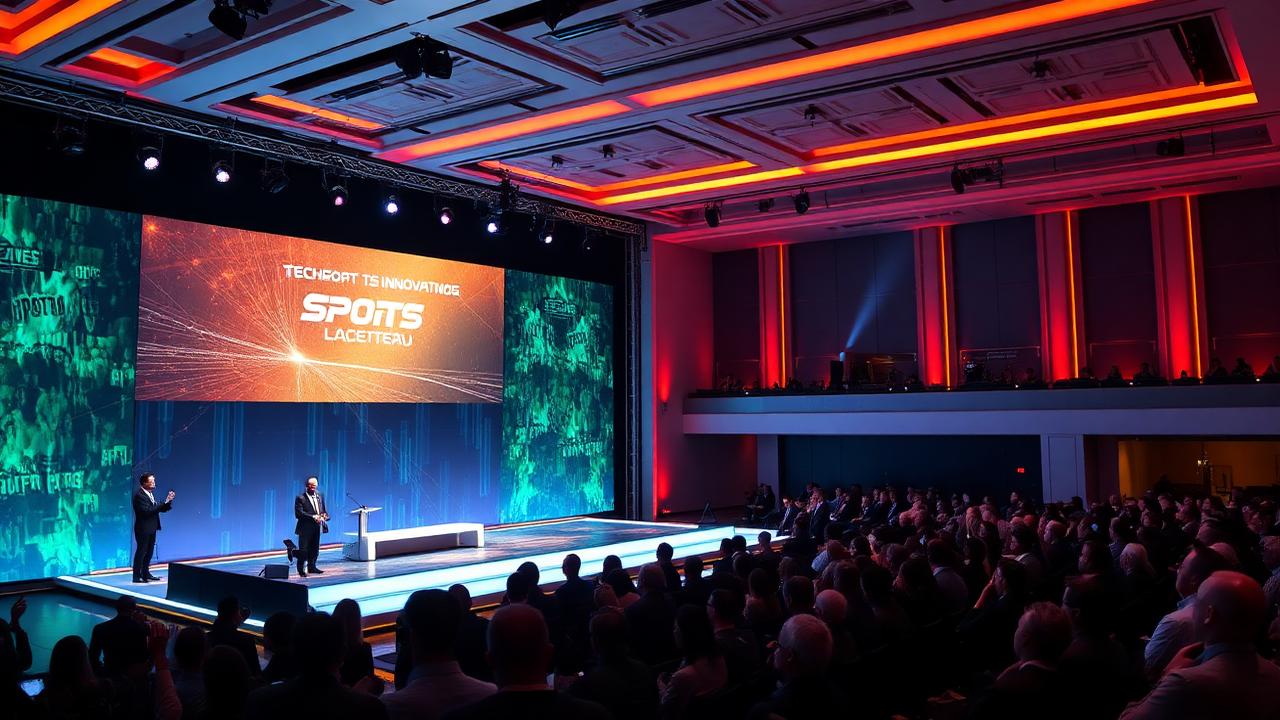
Las Vegas has been hosting the world's largest SportsTech summit since Monday, April 20, 2026: PEAK 2026, organized until April 22 at the brand-new Fontainebleau hotel on the Strip. According to organizers, over 1,000 participants from more than 50 countries—franchise executives, startup founders, venture capitalists, and marketing managers from major brands—are networking over three days of keynotes, panels, and technological demonstrations. The event, presented by Seventy Six Capital, a firm specializing in sports investment, takes place exactly two months before the kickoff of the USA-Mexico-Canada Football World Cup. This is a pivotal edition, bridging the pre-World Cup buzz with the maturity of a sector now valued in the tens of billions of dollars.
A Comprehensive Map of the Sports Business
PEAK 2026 unfolds across eight distinct thematic tracks—four in 2025, eight this year according to the official website—covering the entire value chain of modern sports: data analytics, athlete performance, fan experience in stadiums and at home, regulated sports betting, media and TV rights, health and longevity, sports real estate, and generative artificial intelligence applied to training. More than 100 speakers and as many exhibitors are showcasing their innovations. The format is intentionally compact to foster connections: a survey conducted by Digiday among advertisers in April 2026 shows that the majority of sponsorship deals for the upcoming World Cup are signed on the sidelines of such events, rather than through traditional channels.
The 2026 World Cup in Sight
The looming presence of the June World Cup dominates the agenda. For the first time, the tournament will be co-hosted by three countries—the United States, Mexico, and Canada—will feature 48 teams, and is projected by FIFA estimates cited by Digiday to generate over $11 billion in revenue. For brands, it's uncharted territory. For broadcasters, a technical challenge. For host cities, a showcase. Several PEAK 2026 sessions are dedicated to the activation strategies of global sponsors—Coca-Cola, Adidas, Visa, Hyundai—to the use of stadiums as real-time "data platforms," and to combating ticket scalping. The CMOs of four major international brands will share their roadmaps on Monday evening.
France: Discreet but Present
A small but targeted French delegation: about ten startups from the French Tech Sport collective, representatives from the FFF and the COJOP preparing for the post-2024 era towards the Brisbane 2032 Olympics, and several Parisian funds seeking American targets. The CEO of Eurosport-Discovery was scheduled to participate in a panel on Tuesday about the future of TV rights in streaming. The French SportsTech market, estimated at 1.2 billion euros in 2025, still lags in capitalization compared to the United States and Israel, but has benefited since last year from post-Paris-2024 momentum and a 250 million euro public-private fund launched by Bpifrance.
Expected Innovations: AI, Biometrics, Short-Form Content
The most anticipated themes, according to the official program, concern three technological disruptions: the use of generative AI to personalize live competition narratives, discreet biometrics embedded in clothing (heart rate, hydration, muscle fatigue), and the explosion of short-form content, with TikTok and Instagram Reels becoming dominant vectors for new generations. Several demonstrations promise to be impactful: a stadium facial recognition system to streamline access control, American football protective helmets with real-time impact sensors, and an AI-assisted refereeing platform already tested in the NBA G-League.
Editorial Opinion
Two months before a World Cup unprecedented in its geography and scale, PEAK 2026 serves as a dress rehearsal for the entire global sports business ecosystem. The event confirms that the lines between sport, entertainment, technology, and finance are now structurally blurred: funds invest in clubs as they do in startups, leagues commercialize their data like raw materials, and athletes become brands before being competitors. France, which brilliantly succeeded with its Paris 2024 Games, must now transform this successful organization into an exporting economic sector. Without dedicated capital, without listed champions, without a dominant platform, it will remain a talent provider for foreign platforms. The Las Vegas gathering offers the correct diagnosis. It is now up to Paris to act accordingly.
Key Takeaways
- PEAK 2026 opens Monday, April 20, at the Fontainebleau in Las Vegas (runs until April 22).
- Over 1,000 participants, 100 speakers, 50 countries represented; 8 thematic tracks (vs. 4 in 2025).
- USA-Mexico-Canada Football World Cup on the horizon (June 2026, expected $11B revenue).
- Key trends: generative AI, embedded biometrics, short-form content (TikTok/Reels).
- French delegation: French Tech Sport, FFF, COJOP, Eurosport-Discovery; FR market at €1.2B in 2025.