In 2026, the French retail investor has an unprecedented arsenal of financial tools. The Savings Plan for Shares (PEA), Exchange-Traded Funds (ETF), Bitcoin, and reinvested dividend stocks constitute the four pillars of a diversified wealth strategy. But how to arbitrate between these vehicles? What returns to expect, and for what risks? This article deciphers each option with rigor and data. (
The PEA: the fiscal Swiss Army knife for French investors. Created in 1992, the Savings Plan for Shares remains the most advantageous tax wrapper for investing in European stocks. Capped at €150,000 in contributions (€225,000 with the PEA-PME), it offers total exemption from tax on capital gains and dividends after five years of holding – only the 17.2% social levies apply. In 2026, 7.2 million PEAs are open in France, according to the AMF. The average annual return of the CAC 40 with reinvested dividends over 20 years stands at 7.3%, significantly outperforming the Livret A (3% in 2026) and euro-backed life insurance policies (2.5%). (
ETFs: the low-fee index revolution. ETFs – or trackers – replicate the performance of a stock market index for management fees ranging from 0.05% to 0.40% per year, compared to 1.5% to 2.5% for a traditional active fund. The MSCI World ETF (iShares, Amundi) offers exposure to 1,500 companies from 23 developed countries. Over 10 years, the MSCI World has generated an annualized return of 10.2% (in euros). In 2026, global ETF assets exceed $14,000 billion, according to ETFGI. BlackRock (iShares), Vanguard, and Amundi dominate the market. The icing on the cake: ETFs are eligible for the PEA – an MSCI World PEA ETF (Amundi EWLD, Lyxor EWLD) allows combining global diversification with French tax advantages. (
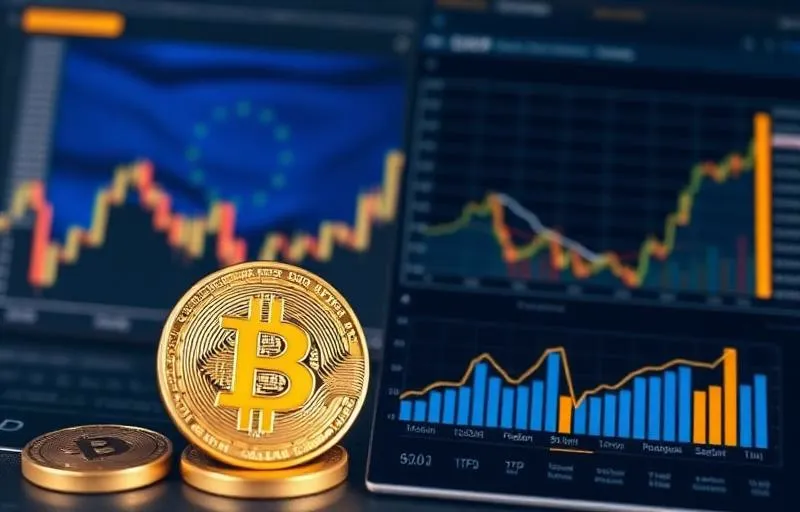
Bitcoin: digital gold enters the institutional era. Since the approval of spot Bitcoin ETFs in the United States in January 2024, Bitcoin has crossed a threshold of legitimacy. By April 2026, BTC is trading around $95,000. Bitcoin ETFs (iShares Bitcoin Trust, Fidelity Wise Origin) total over $120 billion in assets. The April 2024 halving reduced the mining reward to 3.125 BTC per block, strengthening the asset's scarcity. Bitcoin's annualized return over 10 years exceeds 50%, but with extreme volatility: BTC lost 65% between November 2021 and November 2022 before rebounding by 350%. In France, capital gains on crypto are taxed at the PFU of 30% (12.8% income tax + 17.2% social security contributions) or at the progressive tax scale. Warning: Bitcoin is not eligible for the PEA. Experts recommend a portfolio allocation of a maximum of 1% to 5%. (
Reinvested Dividend Stocks: the power of compound interest. The "dividend reinvestment" (DRIP) strategy consists of automatically reinvesting received dividends to buy more shares. Over the long term, this approach multiplies returns thanks to the snowball effect of compound interest. Illustration: €10,000 invested in the CAC 40 in 2006 is worth €18,500 in 2026 without dividend reinvestment, but €31,200 with reinvestment – a 69% additional gain. Among European dividend aristocrats: TotalEnergies (5.8% yield), Sanofi (3.9%), Air Liquide (1.8% + free shares), LVMH (1.5%), and Axa (5.4%). These companies have been increasing their dividends for over 15 consecutive years. (
Optimal Allocation: the four-pillar rule. Wealth management advisors in 2026 recommend a balanced allocation for investors aged 30-45 with a 15-year or longer horizon. Pillar 1: PEA with world ETFs (50-60% of the portfolio) – the core of the strategy, combining maximum diversification and optimal taxation. Pillar 2: reinvested dividend stocks in PEA (20-30%) – European dividend aristocrats to generate recurring income. Pillar 3: Bitcoin and cryptocurrencies (3-5%) – a measured exposure to the highest-performing asset class of the decade, outside the PEA. Pillar 4: liquidities and euro-backed funds (10-20%) – a safety net in life insurance or Livret A. This allocation has generated an average annualized return of 9.1% over the last 10 years, according to Quantalys simulations. (
Fatal Errors to Avoid. First error: not investing at all. Inflation (2.3% in France in 2026 according to INSEE) erodes the purchasing power of dormant savings. Second error: stock-picking without a method. 92% of active fund managers underperform their benchmark index over 15 years, according to the SPIVA report by S&P Global. Third error: investing heavily in Bitcoin without understanding the volatility. Fourth error: ignoring taxation – a standard securities account (CTO) is taxed at the PFU of 30% from the first euro of gain, compared to only 17.2% in a PEA after 5 years. Fifth error: not diversifying geographically – the "home bias" leads the French to overweight the CAC 40, which represents only 3.5% of global stock market capitalization. (
The Future: tokenization, expanded PEA, and European Bitcoin ETFs? Several developments could transform the landscape in 2027. The Financial Markets Authority (AMF) is studying an expansion of the PEA to include US stocks – a revolution that would allow direct investment in Apple, Microsoft, or Nvidia within a PEA. Furthermore, the tokenization of financial assets on the blockchain is progressing: Société Générale-Forge issued the first euro-denominated tokenized bond, and BlackRock launched a tokenized money market fund (BUIDL) on Ethereum. Finally, Europe could approve the first spot Bitcoin ETFs in 2027, after the United States, paving the way for massive institutional adoption on the Continent. (