
The deadline for confirming choices on Parcoursup is April 2, 2026, and this year, the stress for the 945,000 registered candidates takes on an unprecedented dimension. According to an IFOP survey for Jedha AI School published in December 2025, a quarter of young people aged 16 to 25 already use artificial intelligence daily, and 61% of high school students polled by the Journal du Geek in March 2026 stated they had used an AI chatbot for career guidance. The question is no longer "should we be interested in AI?", but "how to build a professional path that AI won't make obsolete before even obtaining the diploma?"
Threatened Fields: The Great Redistribution
The OECD's report on the future of employment (2024, updated in 2025) estimates that 27% of jobs in member countries rely on skills easily automated by AI. Administrative, accounting, basic legal, and standardized writing tasks are among the most vulnerable professions. In France, a Diplomeo study from March 2026 reveals that traditionally popular fields—general law, administrative management, secretarial work—are seeing their enrollment drop by 12% to 18% in one year. Conversely, Le Monde reported on March 12, 2026, that "AI is disrupting career dreams in creative fields" among young people, with graphic design, translation, and agency journalism jobs now perceived as vulnerable.
Resilient Fields: Betting on the Irreplaceable
Digischool, in its March 2026 analysis, identifies three categories of "AI-resilient" training programs:
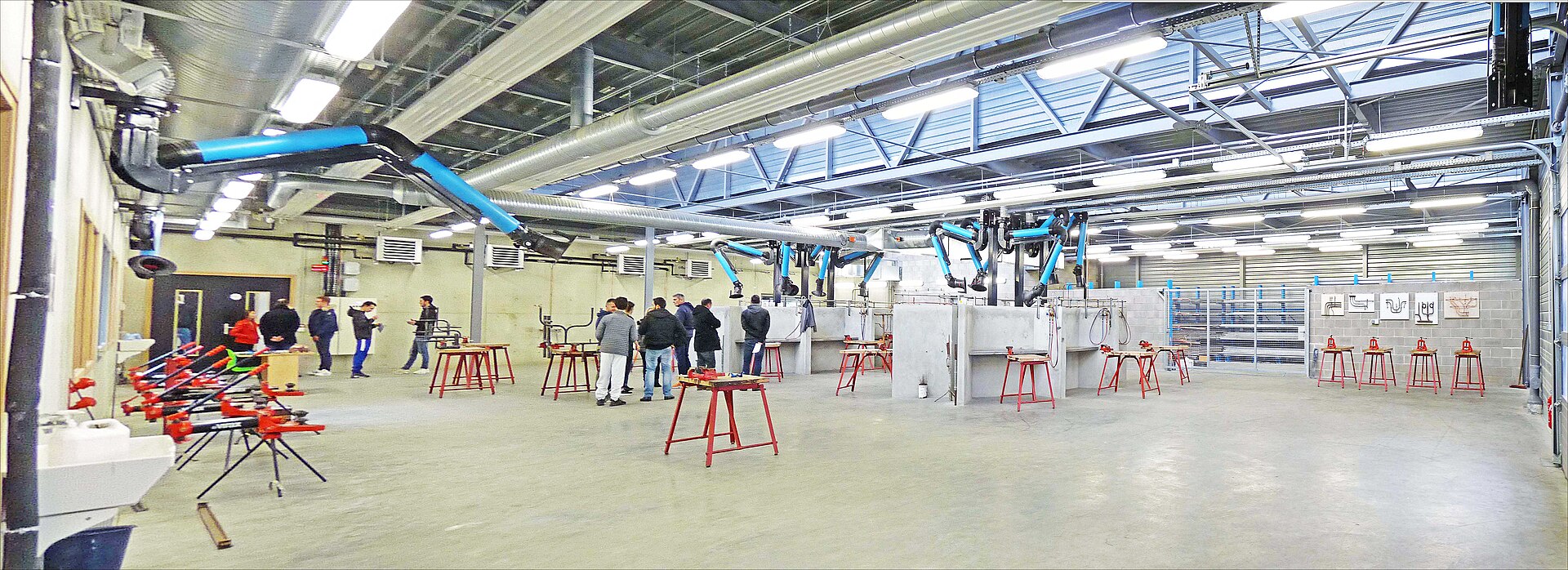
- Manual and physical trades: craftsmanship, clinical medicine, surgery, physiotherapy, plumbing, electrical work. AI can assist, but not replace the technical gesture.
- Human-centric professions: psychology, social work, special education, nursing, elderly care. Empathy and human connection remain out of reach for algorithms.
- Strategic creativity professions: artistic direction, architecture, fundamental research, cutting-edge engineering. AI generates, but it is humans who conceive the vision.
In addition to these three pillars, there is obviously the AI sector itself: data science, machine learning, prompt engineering, AI ethics—training programs whose enrollments are exploding by 40% on Parcoursup 2026, according to the Ministry of Higher Education.
The Winning Strategy: The "T-shaped Profile"
Recruiters and business schools converge on the same advice: the T-shaped profile. The concept, theorized by Tim Brown (IDEO) and adopted by HR directors of major French companies, involves combining deep vertical expertise (a profession, solid technical skill) with a horizontal bar of transversal skills: mastery of AI tools, critical thinking, communication, project management, multilingualism. HEC, ESSEC, and Polytechnique have all integrated mandatory AI modules into their curricula starting in the fall of 2025. Sciences Po launched a "AI and Public Policy" certificate in January 2026 which was fully booked within three weeks.
Don't Panic, But Adapt
The trap would be to shy away from any field affected by AI. Law, for example, is not disappearing; it is transforming. Law firms are now hiring legal professionals capable of operating automated contract analysis tools (legaltech). Accounting is evolving towards strategic consulting and financial data. Journalism—our own field—is reinventing itself around investigation, verification, and analysis, areas where AI cannot (yet) replace fieldwork.
The message to the high school students of 2026 is clear: do not choose a field *in spite of* AI, choose one *with* AI. Learn to use these tools as amplifiers of your human skills, not as competitors. The future does not belong to machines; it belongs to those who know how to work with them.