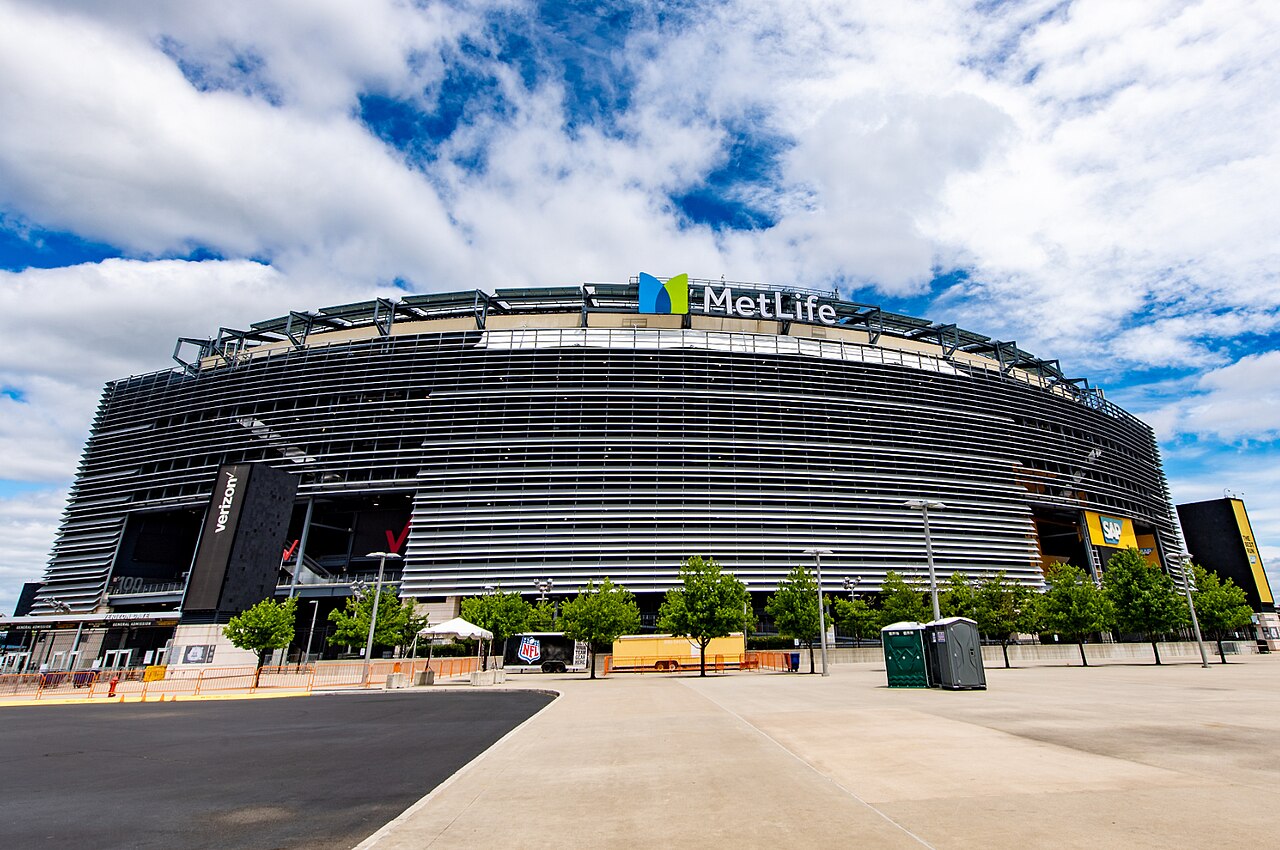
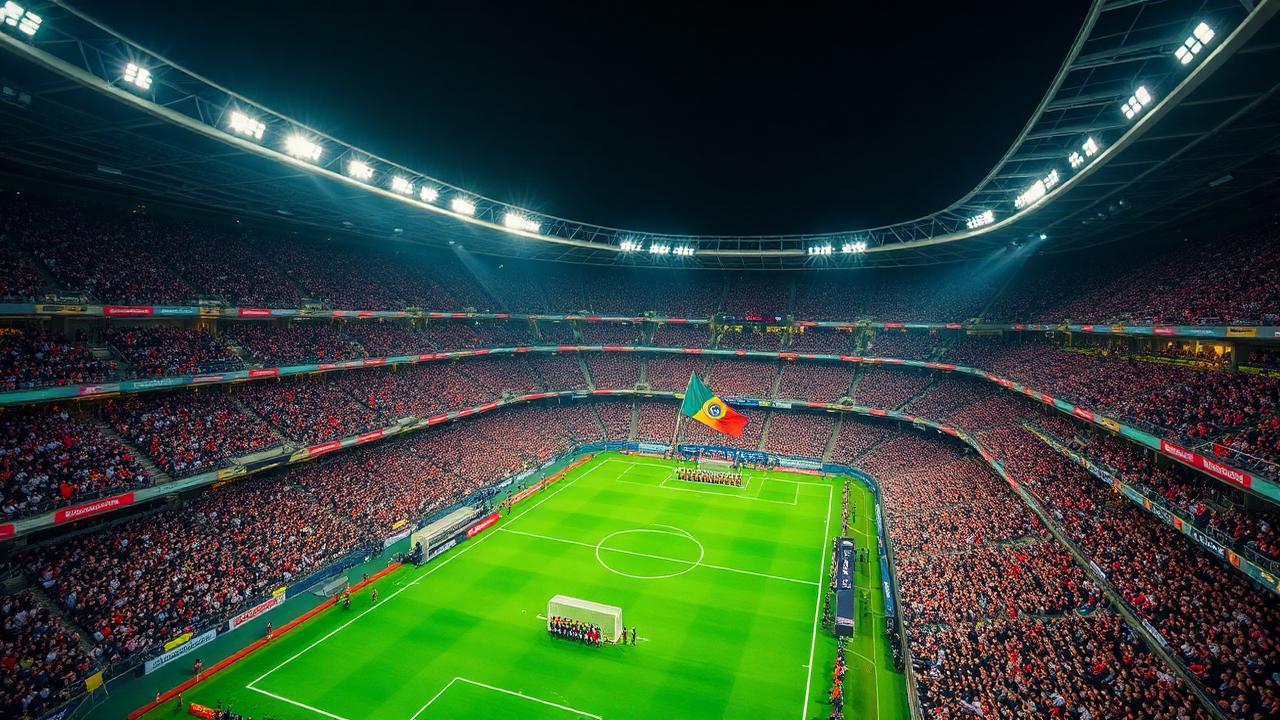
The kickoff will take place on Thursday, June 11, 2026, at the Estadio Azteca in Mexico City, on the same pitch where Diego Maradona lifted the Cup forty years prior. Forty days later, on Sunday, July 19, the MetLife Stadium in New Jersey will crown the twenty-third world champion, in front of nearly 83,000 spectators. In between: 104 matches, 48 nations, 16 host cities, three time zones, and a format that FIFA has never experimented with on this scale.
A 48-Team Format, Twelve Groups, and an Extra Round of 32
The structural change is significant. The 32 teams of previous editions are replaced by 48 selections, divided into twelve groups of four. The top two from each group will automatically qualify for the knockout stage, along with the eight best third-placed teams — totaling 32 qualifiers. This opens up a new Round of 32, followed by the classic stages: Round of 16, quarterfinals, semifinals, and the final.
The decision for twelve groups of four, rather than sixteen groups of three initially considered, was finalized by the FIFA Council in March 2023. This came after the scenario of the 2022 World Cup — where the simultaneous decisive final matches of Group E (Germany vs. Costa Rica / Spain vs. Japan) created suspense that became a selling point. Groups of three would have eliminated this final, high-stakes match, potentially exposing the tournament to collusion.
A direct consequence: the winner will play eight matches instead of seven, pushing the tournament's duration to 39 days — the longest in modern World Cup history.
Three Countries, Sixteen Cities, Three Time Zones
The 2026 World Cup is the first in history to be jointly hosted by three countries: the United States (11 cities), Canada (2 cities: Toronto and Vancouver), and Mexico (3 cities: Mexico City, Guadalajara, Monterrey). This asymmetrical distribution reflects both the hosting capacity and the economic weight of the American market in FIFA's financial project.
On the United States' side, eleven NFL and MLS stadiums are mobilized: MetLife Stadium (New York/New Jersey), SoFi Stadium (Los Angeles), AT&T Stadium (Dallas), Mercedes-Benz Stadium (Atlanta), NRG Stadium (Houston), Lincoln Financial Field (Philadelphia), Hard Rock Stadium (Miami), Levi's Stadium (San Francisco Bay Area), Lumen Field (Seattle), Arrowhead Stadium (Kansas City), Gillette Stadium (Boston).
On Canada's side: BMO Field (Toronto) and BC Place (Vancouver).
On Mexico's side: Estadio Azteca (Mexico City), Estadio Akron (Guadalajara), and Estadio BBVA (Monterrey).
The final, the semifinals, and seven of the eight knockout matches will be held in the United States. Canada will host group matches and a Round of 32 game. Mexico will host the opening match, seven group stage games, and three knockout matches up to the quarterfinals.
Key Figures of the 2026 World Cup
- 48 qualified nations, including 9 for the first time in a final tournament (Cape Verde, Curaçao, Haiti, Jordan, Uzbekistan, Panama, among others).
- 104 matches, compared to 64 for the 32-team editions.
- 16 host cities spread across 3 countries.
- 39 days of competition, from June 11 to July 19, 2026.
- 6.5 million tickets put on sale, a record.
- Over 5 billion cumulative viewers anticipated by FIFA.
The Twelve Groups: Balances and Imbalances
The draw, held in Las Vegas on December 5, 2025, produced highly heterogeneous configurations. Group E has thus become the 'Group of Death' for this edition: Spain, Germany, Cape Verde, and Iran coexist in a quartet where three nations legitimately aiming for the Round of 16 will have to battle it out. Conversely, Group G (Brazil, Norway, Ghana, New Zealand) offers the five-time world champion a relatively clear path to the knockout stages.
France is drawn into Group B with Senegal, Uruguay, and Jordan. A manageable draw on paper, but Aliou Cissé's Senegal remains one of the most feared teams by bookmakers, and Marcelo Bielsa's Uruguay can challenge anyone in a single match. 'Les Bleus' will open their tournament on June 14 in Dallas against Uruguay, play on June 19 in Boston against Senegal, and conclude their group stage on June 24 in Atlanta against Jordan.
Schedule of Major Events
- June 11, 2026 — Mexico City, Estadio Azteca: Opening match, Mexico vs. Germany (Group A).
- June 12-26: Group stage (72 matches).
- June 27 - July 3: Round of 32 (16 matches).
- July 4-7: Round of 16.
- July 9-11: Quarterfinals.
- July 14-15: Semifinals (Arlington, Texas, and Atlanta).
- July 18 — Miami: Third-place match.
- July 19, 2026 — East Rutherford, MetLife Stadium: Final, kickoff at 3 PM local time (9 PM in France).
> "This World Cup will be the most complex ever organized. Logistically, climatically, geopolitically. FIFA has a lot to lose: too many teams can kill the rhythm, but too much money is at stake to back down." — *Jules Maréchal, OrChair*
Climate, Time Zones, and Travel: The Real Equation
Behind the format lies an unprecedented physical challenge. Between Vancouver and Miami, there are over 5,000 kilometers and three hours of time difference. The teams with the least fortunate schedules will chain five-hour flights and time zone changes between matches, in stadiums where ground temperatures can exceed 40°C in Dallas or Houston in July. Several coaches – including Didier Deschamps before his departure – have publicly called for relaxed substitution rules and the return of 'cooling breaks' tested in 2014 in Brazil.
FIFA has confirmed that matches with a perceived temperature exceeding 32°C will allow for two hydration breaks per half, and five substitutions will remain permitted, plus a sixth in extra time. Six out of sixteen stadiums are air-conditioned or covered (AT&T in Dallas, SoFi in Los Angeles, NRG in Houston, Mercedes-Benz in Atlanta, Lumen Field in Seattle partly, BC Place in Vancouver).
Broadcast and Ticketing in France
In France, TF1 and beIN Sports share the broadcast rights: TF1 will broadcast 28 matches free-to-air, including all of France's games, the quarterfinals, semifinals, and the final. beIN Sports will broadcast all 104 matches. Regarding tickets, the second phase of sales on FIFA.com/tickets closed in mid-May 2026; now, the late phase opens in June, subject to a draw, as well as official resale.
Key Takeaways
- 48 teams, 12 groups of 4, 104 matches over 39 days: an unprecedented format.
- 3 host countries: United States (11 cities), Canada (Toronto, Vancouver), Mexico (Mexico City, Guadalajara, Monterrey).
- Kickoff on June 11, 2026, at the Azteca, final on July 19 at MetLife Stadium (New Jersey).
- France in Group B with Uruguay, Senegal, Jordan; first match on June 14 in Dallas against Uruguay.
- French Broadcast: TF1 (28 free-to-air matches) + beIN Sports (full coverage).
- Anticipated Attendance: 6.5 million tickets, over 5 billion cumulative viewers.
Follow our complete dossier: /dossier/coupe-du-monde-2026