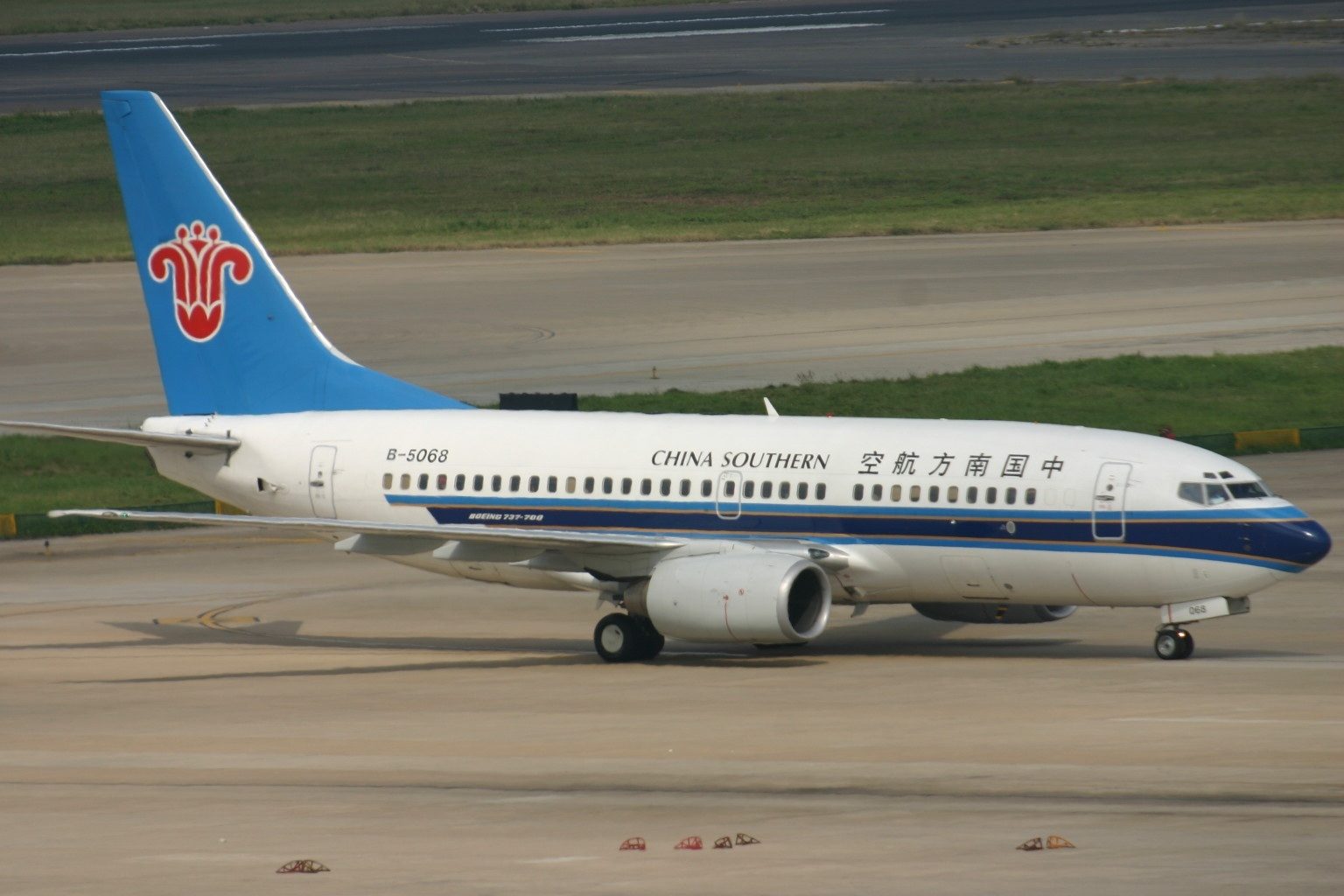
Beijing did not wait long to implement the commitments made to Donald Trump. On Wednesday morning, May 20, 2026, the Chinese Ministry of Commerce confirmed the purchase of 200 Boeing aircraft and indicated that Beijing wished to obtain an extension of the tariff agreement concluded in Kuala Lumpur in 2025. Spokesperson He Yongqian specified at a press conference that the order included 130 737 MAX 8 narrow-body jets and 70 787-9 long-haul jets, to be delivered between 2027 and 2031. US Commerce Secretary Howard Lutnick immediately hailed it as 'the most significant Chinese order in eight years'.
A Symbolic Break
The event is primarily symbolic. Since 2018 and the imposition of the first Trump tariffs, Beijing had not placed any significant orders with Boeing, favoring Airbus and, more recently, its own aircraft manufacturer, Comac. The double tragedy of the 737 MAX in 2018-2019 had further frozen Sino-American relations in the aeronautics sector. China's return to Seattle's order book, for 200 aircraft, ends seven years of commercial standoff and gives the American manufacturer a more serene industrial outlook.
The American Counterpart
In exchange, Washington commits to providing China with 'supply guarantees' for aircraft spare parts and certain components – a significant concession, as exports of engines and avionics software have been subject to national security restrictions since 2022. The US Department of Commerce confirmed that it would publish a revised list of authorized components by the end of the month. This list is expected to include certain CFM LEAP-1B engines, jointly manufactured by General Electric and Safran, which has not failed to alert French authorities.
Kuala Lumpur, The Agreement to Extend
The second part of the announcement concerns the tariff truce signed in Kuala Lumpur on October 28, 2025, following a Sino-American summit held on the sidelines of the ASEAN summit. This agreement had temporarily reduced reciprocal tariffs from 145% to 30% on the US side, and from 125% to 10% on the Chinese side, for an initial period of six months. The truce, already extended once last April, is now set to expire on August 10. Beijing is requesting an extension of at least twelve months, coupled with a precise de-escalation agenda.
Context of the Trump Visit
This dual announcement comes in the direct wake of Donald Trump's visit to Beijing on May 14-15, 2026, the first visit of a US president to China since 2017. The final communiqué of the summit, partly revealed by Reuters and The Wall Street Journal, explicitly mentioned a 'substantial' aeronautics component and a 'renewable' tariff component. The absence of precise figures was then perceived as a weakness of the document – the Chinese ministry has now provided them within five days.
Immediate Market Impact
Boeing's stock surged by 4.8% at the opening of Wall Street, reaching $245.30, its highest level since November 2024. The group's capitalization regained nearly $9 billion in a few minutes. In Paris, Safran and Airbus also benefited from the momentum, with respective increases of 2.3% and 1.9%. In Hong Kong, the Hang Seng index closed up 1.4%, driven by tourism and airline stocks. Air China and China Southern, two of the likely main recipients of the Boeing order, rose by more than 3%.
Lingering Uncertainties
However, the enthusiasm must be tempered. The orders announced by Chinese authorities are, in the overwhelming majority of cases, 'letters of intent' that do not systematically translate into firm contracts. In 2017, Donald Trump left Beijing with the announcement of an order for 300 Boeing aircraft: less than half were ultimately converted into deliveries. Cowen analysts recalled, in a note published this morning, that the 200 aircraft announced represent only slightly more than two years of additional production capacity for Boeing, indicating a real but not revolutionary economic leverage.
Beijing Also Plays the Sovereignty Card
The timing with a new announcement from Comac is significant in this regard. The Chinese manufacturer confirmed on Tuesday, May 19, that it would deliver 65 C919 aircraft to China Eastern and Air China by the end of 2026, nearly doubling the current pace. For Beijing, the Boeing order is therefore not a return to the technological dependency of the 2000s, but a calibrated diversification: buying American to open the tap for critical components, while simultaneously accelerating national industrial ramp-up. This strategy mirrors that adopted by the United States regarding rare earths.
Editorial Viewpoint
The order for 200 Boeing aircraft is a brilliant tactical move for Xi Jinping: at zero symbolic cost – China needs these planes anyway – he offers Donald Trump a spectacular victory to brandish before his public. In exchange, Beijing obtains two major concessions: access to critical components and the promise of a tariff extension. Boeing, for its part, gains time. But let us not be mistaken: the true long-term winner remains Comac, which benefits from every transatlantic respite to catch up. In ten years, the Chinese fleet will be predominantly Chinese, and Boeing orders will appear, in retrospect, as the last major American year in China.
Key Takeaways
- Wednesday, May 20, 2026: Beijing confirms an order for 200 Boeing aircraft (130 x 737 MAX 8 and 70 x 787-9), deliveries from 2027-2031.
- American counterpart: Supply guarantees for spare parts and certain CFM LEAP-1B engines.
- Request for extension of the Kuala Lumpur agreement (tariff truce at 30% / 10%), expiring August 10, 2026.
- Direct consequence of Donald Trump's visit to Beijing on May 14-15, 2026.
- Boeing jumps 4.8% on Wall Street, Airbus +1.9%, Safran +2.3%.
- Comac simultaneously announces 65 C919 deliveries in 2026: Beijing diversifies without abandoning sovereignty.